Skip to content
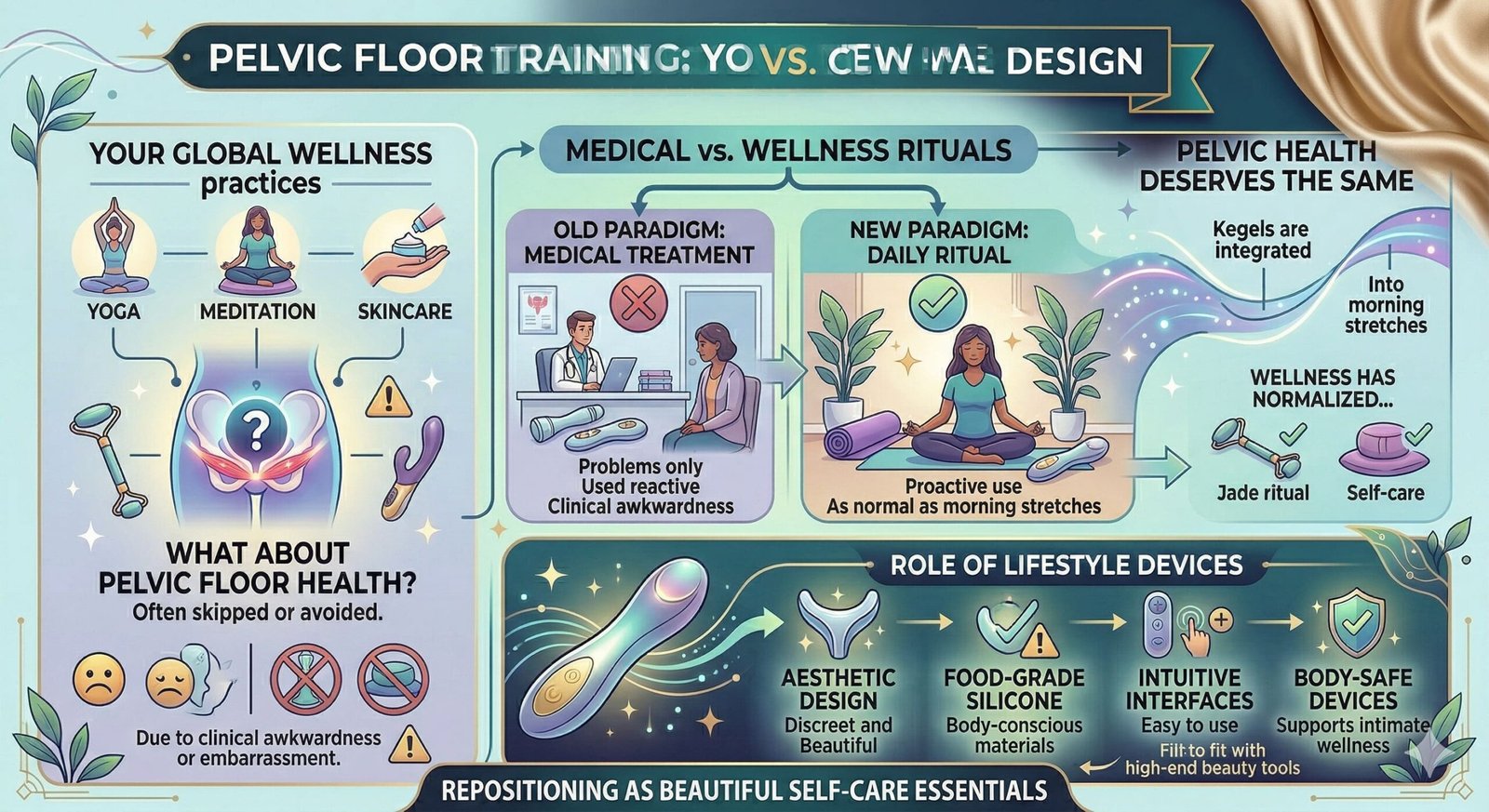
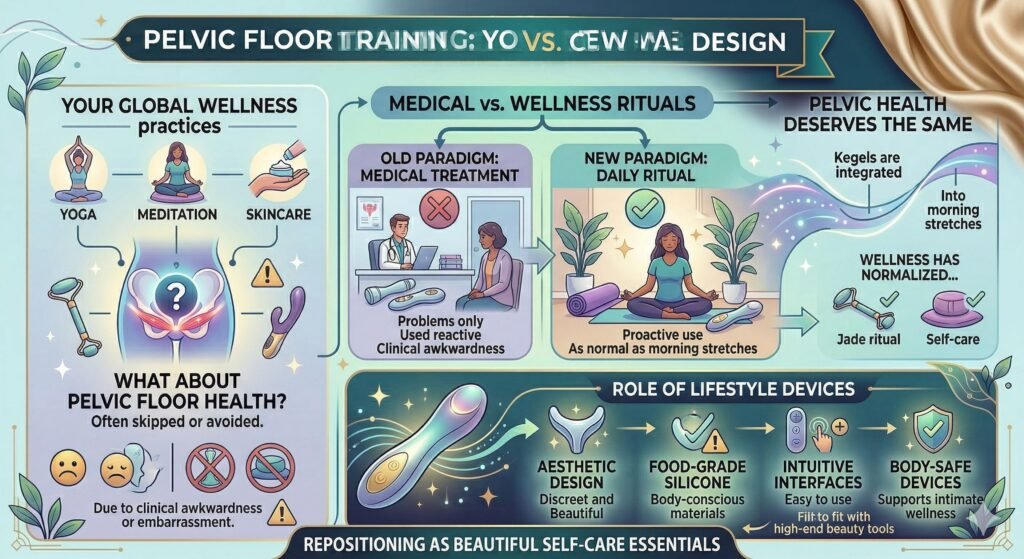
You do yoga. You meditate. You prioritize skincare. But what about the muscles that support your core, your confidence, and your intimate wellness? Most women skip pelvic floor training because it feels clinical or embarrassing.
Pelvic floor training is shifting from medical treatment to daily wellness ritual—just like yoga or meditation. Non-medical pelvic health devices designed for lifestyle use help women integrate Kegel exercises into their self-care routines without clinical awkwardness. These body-safe devices use food-grade silicone, aesthetic designs, and intuitive interfaces to make pelvic health as normal as your morning stretches.
💡 Personal Insight: Last year, a client approached me with an idea. She owned three yoga studios and noticed her students asking about pelvic floor health after pregnancy or menopause. But they didn't want medical devices. They wanted something that fit their wellness lifestyle—something they could use as naturally as they rolled out their yoga mat.
The wellness industry has normalized everything from jade rollers to meditation cushions. Pelvic health deserves the same treatment.
At VF Pleasure, we've spent years helping brands reposition pelvic health devices from clinical tools to beautiful self-care essentials. Let me show you how this transformation is happening.
- 1 Why Is Pelvic Floor Training Moving Beyond Medical Settings? 🌿
- 2 How Can Kegel Exercise Become Part of Your Wellness Ritual? ✨
- 3 What Makes Non-Medical Pelvic Health Devices Different? 🎯
- 4 Which Pelvic Floor Devices Fit a Lifestyle Approach? 🌸
- 5 How Do Modern Pelvic Health Devices Support Daily Practice? 💪
- 6 Conclusion 🌟
Why Is Pelvic Floor Training Moving Beyond Medical Settings? 🌿
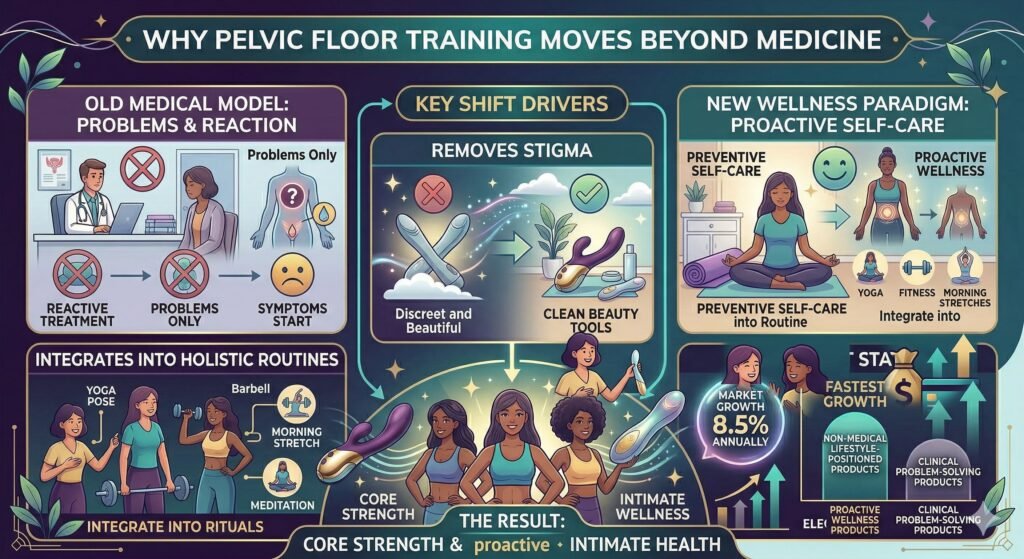
Medical settings make pelvic health feel like a problem to fix, not a practice to maintain. That positioning keeps women from starting until symptoms appear. But prevention is always easier than treatment.
📊 Wellness Shift: The pelvic health device market is growing at 8.5% annually, with the fastest growth in non-medical, lifestyle-positioned products designed for proactive wellness rather than problem-solving.
Pelvic floor training is moving beyond medical settings because modern wellness consumers view it as preventive self-care, not reactive treatment. Non-medical pelvic health devices appeal to yoga practitioners, fitness enthusiasts, and wellness-focused women who want to maintain core strength and intimate wellness proactively. This repositioning removes stigma and integrates pelvic health into holistic wellness routines.
The Wellness-First Mindset 🎯
Think about how yoga became mainstream. Fifty years ago, it was considered alternative or even weird. Now it's a $12 billion industry.
Pelvic floor training is following the same path.
The women buying yoga mats, adaptogens, and red light therapy devices are the same women who need pelvic health support. They just need products that speak their language.
When I talk to retailers about female wellness devices, they tell me the same thing: customers want wellness tools, not medical equipment.
From Clinical to Ritual: The Language Shift 📖
The way we talk about pelvic health matters enormously.
❌ Medical Language:
- "Pelvic floor dysfunction treatment"
- "Incontinence management device"
- "Post-surgical rehabilitation tool"
✅ Wellness Language:
- "Core strength support"
- "Intimate wellness practice"
- "Daily pelvic floor ritual"
🌟 This isn't just marketing spin. It's acknowledging that most women should start pelvic floor training before they have problems—just like you don't wait until you're injured to start stretching.
Who Benefits from Proactive Pelvic Health? 💪
Everyone with a pelvic floor should care about this.
Here's who's driving the non-medical pelvic health device trend:
🔸 Pregnant and Postpartum Women
- Want to maintain strength during pregnancy
- Recover faster after childbirth
- Prevent future issues
🔸 Athletes and Fitness Enthusiasts
- Support core stability during workouts
- Prevent stress incontinence during high-impact exercise
- Enhance overall performance
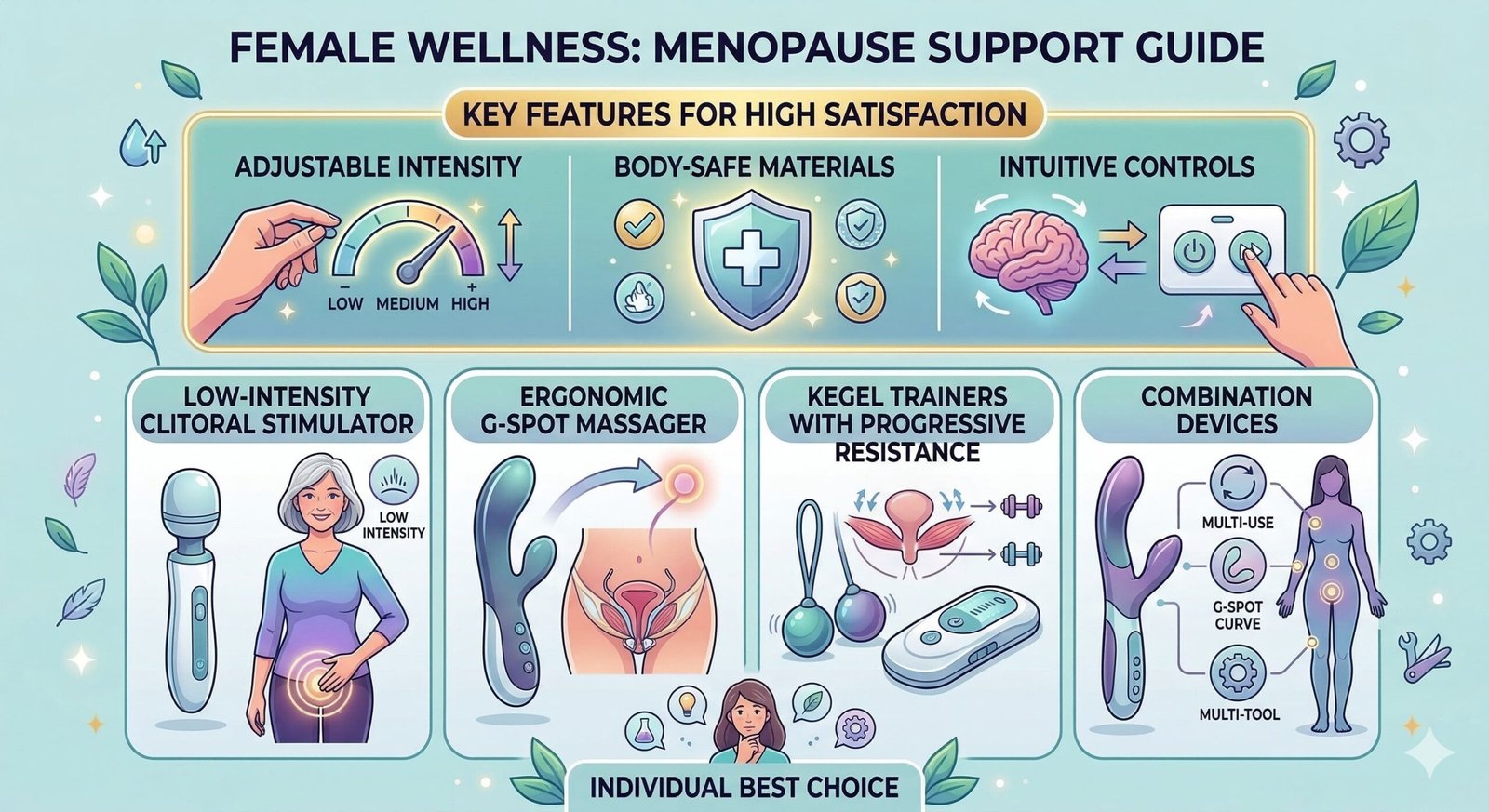
🔸 Perimenopausal and Menopausal Women
- Counteract hormonal tissue changes
- Maintain sensitivity and function
- Support bladder control
🔸 Wellness-Focused Younger Women
- Preventive care before symptoms appear
- Part of holistic body awareness
- Integrated into yoga and mindfulness practices
At our adult toy factory, we design pelvic health devices for all these groups. But we position them as wellness tools, not medical devices.
🧘♀️ WELLNESS BRAND OPPORTUNITY: If you serve yoga practitioners, meditation enthusiasts, or holistic health customers, pelvic health devices are a natural product extension. At VF Pleasure, we help wellness brands develop private label pelvic health tools with aesthetic design and body-safe materials. Explore our wellness-focused OEM services →
How Can Kegel Exercise Become Part of Your Wellness Ritual? ✨
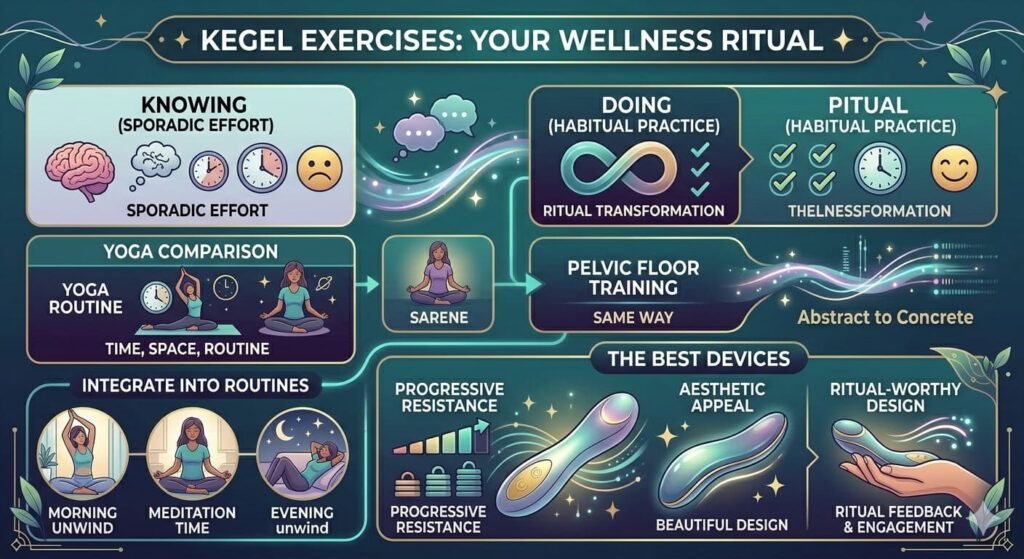
Most people know they should do Kegel exercises. Almost nobody does them consistently. The difference between knowing and doing is ritual—turning sporadic effort into habitual practice.
💡 Yoga Comparison: You don't "do yoga" randomly when you remember. You set a time, create a space, and make it part of your routine. Pelvic floor training works the same way.
Kegel exercises become sustainable wellness rituals when integrated into existing routines with the support of beautiful, easy-to-use devices. Like yoga props or meditation cushions, non-medical pelvic health devices provide structure, feedback, and tactile engagement that transform abstract exercises into concrete practices. The best devices offer progressive resistance, aesthetic appeal, and ritual-worthy design.
Building Your Pelvic Floor Practice 🏗️
I've talked to hundreds of women about their pelvic health routines. The ones who stick with it have one thing in common: they've ritualized it.
Here's how successful practitioners build their pelvic floor rituals:
🔸 Morning Practice (5-10 minutes)
- After waking, before starting the day
- Often combined with stretching or meditation
- Sets intention for body awareness
🔸 Post-Workout Practice (10 minutes)
- After yoga, pilates, or gym sessions
- Enhances core engagement awareness
- Complements other fitness goals
🔸 Evening Wind-Down (10-15 minutes)
- Part of bedtime self-care routine
- Combined with relaxation or reading
- Supports better sleep quality
🌙 Personal Story: The yoga studio owner I mentioned earlier created a "pelvic floor class" at her studio. Not a medical workshop—a wellness class. Students use our custom-designed devices that look like polished stones. They practice breathwork, mindful engagement, and progressive strengthening. It's become one of her most popular offerings.
The Role of Devices in Building Ritual 🎨
You could do Kegel exercises without any tools. But you could also do yoga without a mat or meditate without a cushion.
Tools create ritual.
Non-medical pelvic health devices serve multiple functions:
- Tactile Engagement: Physical object makes practice concrete
- Progressive Resistance: Builds strength systematically
- Ritual Marker: Signals "this is my practice time"
- Aesthetic Integration: Beautiful objects deserve display, not hiding
- Feedback Mechanism: Helps you know you're doing it correctly
At VF Pleasure, we design devices specifically for ritual use. That means:
- Food-grade silicone that feels luxurious
- Shapes inspired by nature (river stones, seeds, organic forms)
- Neutral, spa-like colors (sage, cream, terracotta, soft grey)
- Seamless construction that's beautiful to look at
- Weighted progressions that mark advancement
💼 For Retailers: Customers who buy yoga accessories will buy pelvic health devices—if they're positioned correctly. We help brands create female wellness devices that fit wellness retail environments, not adult stores.
Integration with Other Wellness Practices 🌸
Pelvic floor training doesn't exist in isolation. The women embracing it are already doing other wellness practices.
Here's how they integrate:
| Wellness Practice | Pelvic Floor Integration | Combined Benefit |
|---|---|---|
| Yoga | Pelvic engagement during poses | Enhanced core stability |
| Meditation | Mindful pelvic awareness | Body-mind connection |
| Breathwork | Coordinated pelvic contraction | Autonomic nervous system regulation |
| Journaling | Track strength progression | Mindful body awareness |
| Skincare Routine | Evening pelvic self-care | Complete body wellness |
🧘♀️ The women buying adaptogens and jade rollers are your pelvic health device customers. They just need to see these tools positioned in their language.
🌟 CREATE YOUR WELLNESS PRODUCT LINE: Ready to add pelvic health devices to your yoga, meditation, or wellness brand? We specialize in OEM/ODM manufacturing for non-medical intimate wellness products. Our design team can create devices that match your brand aesthetic. Schedule a consultation to explore possibilities →
What Makes Non-Medical Pelvic Health Devices Different? 🎯
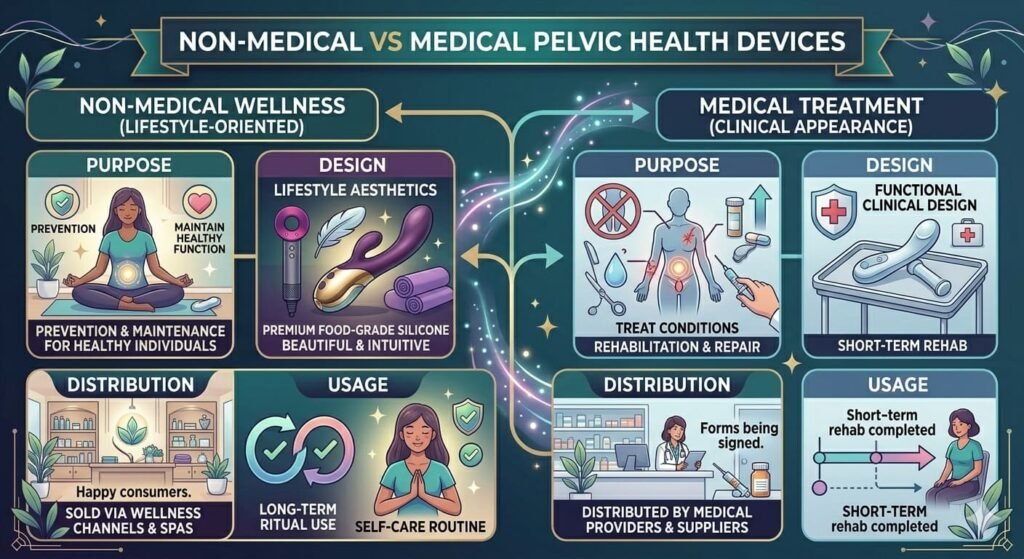
The line between medical and non-medical matters—both legally and psychologically. Medical devices treat conditions. Non-medical wellness devices support healthy function.
⚠️ Important Distinction: Non-medical pelvic health devices are designed for wellness maintenance by healthy individuals, not for treating diagnosed medical conditions. This positioning affects design, marketing, distribution, and customer psychology.
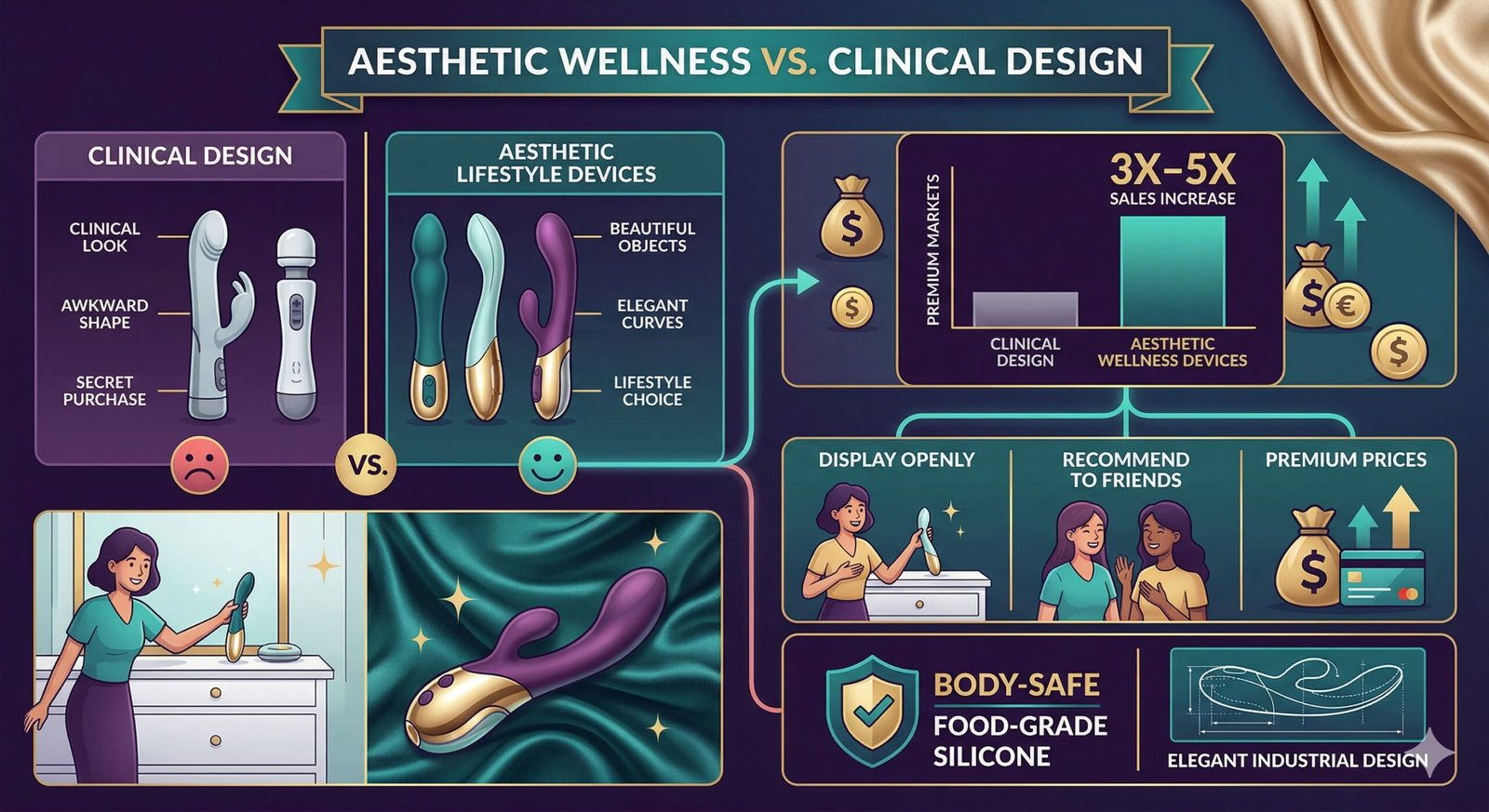
Non-medical pelvic health devices differ from medical ones in purpose, design, distribution, and positioning. They focus on prevention and maintenance rather than treatment, use lifestyle-oriented aesthetics rather than clinical appearance, and are sold through wellness channels rather than medical suppliers. They're made with premium materials like food-grade silicone and designed for long-term ritual use, not short-term rehabilitation.
Purpose and Positioning 📊
The fundamental difference starts with why the product exists.
Medical Pelvic Health Devices:
- Designed to treat diagnosed conditions
- Prescribed by healthcare providers
- Focus on rehabilitation or symptom management
- Clinical appearance and packaging
- Sold through medical supply channels
Non-Medical Wellness Devices:
- Designed for proactive maintenance
- Self-selected by consumers
- Focus on prevention and enhancement
- Aesthetic, lifestyle-oriented design
- Sold through wellness and beauty retailers
💡 At VF Pleasure, we exclusively manufacture non-medical wellness devices. We're not competing with medical equipment manufacturers. We're creating tools for women who want to maintain pelvic health as part of their overall wellness practice.
Design Philosophy Differences 🎨
Walk into a medical supply store, then walk into a high-end yoga boutique. The visual languages are completely different.
Non-medical pelvic health devices embrace wellness design principles:
🔸 Material Choices
- Food-grade platinum silicone (feels luxurious, completely body-safe)
- Polished finishes that look like design objects
- Colors inspired by nature and spa environments
- Premium presentation packaging
🔸 Form and Aesthetics
- Organic, flowing shapes
- Inspired by natural forms (stones, seeds, petals)
- Displayable rather than hideable
- Beautiful enough to photograph
🔸 User Experience
- Intuitive without instruction manuals
- Pleasant to handle and use
- Part of a calming ritual, not a chore
- Feels like self-care, not treatment
📖 Real Example: We redesigned a standard Kegel ball set for a wellness brand. Original version: pink plastic eggs in a medical-looking clamshell. Our version: gradient-sized smooth stones in sage and cream colors, housed in a linen pouch that looked like it held meditation beads. Same function. Completely different psychology.
Distribution and Market Access 🛍️
Where products are sold signals what they're for.
Medical devices go through pharmacies, medical supply stores, sometimes doctor's offices. That distribution says "you need this because something is wrong."
Non-medical wellness devices go through:
- Yoga and fitness studios
- Wellness boutiques
- Beauty and self-care retailers
- Premium lifestyle e-commerce
- Subscription wellness boxes
🚀 This is where private label and white label manufacturing creates opportunity. Wellness brands can add pelvic health devices to their existing product lines without entering the medical device space.
Regulatory and Compliance Considerations ⚖️
I'm not a lawyer, but I've worked with regulatory consultants for 15 years. Here's what I've learned:
Medical devices require:
- FDA approval or clearance (in US)
- Clinical trials and efficacy data
- Specific manufacturing certifications
- Restricted marketing claims
- Medical device reporting
Non-medical wellness devices require:
- General product safety compliance
- Material safety certifications
- Accurate but non-therapeutic marketing
- Standard consumer product regulations
- Quality manufacturing practices
⚠️ Critical Point: As a sex toy manufacturer, we ensure all products meet safety standards and use body-safe materials, but we don't make medical claims. Our devices support wellness practices, not treat medical conditions.
At our factory, we maintain rigorous quality standards that exceed requirements for consumer products. We use body-safe materials, conduct safety testing, and follow manufacturing best practices. But our products are positioned for wellness, not medicine.
💼 WELLNESS BRAND DEVELOPMENT: Navigating the non-medical positioning for pelvic health products? We help brands develop compliant, wellness-focused female wellness devices with clear positioning. Our regulatory knowledge and design expertise ensure your products are both effective and appropriately positioned. Let's discuss your brand vision →
Which Pelvic Floor Devices Fit a Lifestyle Approach? 🌸
Not all pelvic health devices translate well to lifestyle positioning. Some inherently feel clinical. Others naturally fit wellness contexts. Understanding the difference helps you choose or create the right products.
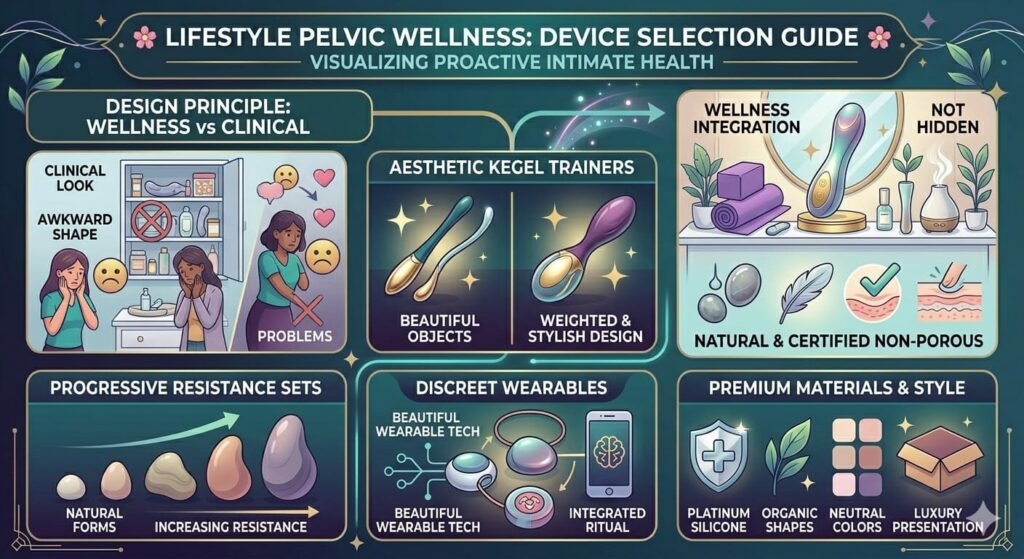
💡 Design Principle: Lifestyle pelvic health devices should look equally at home next to yoga blocks, essential oil diffusers, or skincare tools—not in a medicine cabinet.
Lifestyle-appropriate pelvic floor devices include weighted Kegel trainers with aesthetic design, yoni eggs made from body-safe materials, progressive resistance sets with natural forms, and wearable devices with discreet, beautiful design. They prioritize food-grade silicone, organic shapes, neutral colors, and premium presentation. Electronic biofeedback devices can work if designed like wellness tech rather than medical equipment.
Weighted Kegel Trainers: The Foundation 🏋️♀️
Weighted trainers are the most popular category for lifestyle positioning. They're simple, intuitive, and visually adaptable.
What makes them work for wellness markets:
🔸 Progressive Weight Sets
- Three to five weights (usually 25g to 100g)
- Marks advancement and achievement
- Feels like strength training, not therapy
🔸 Aesthetic Material Choices
- Matte food-grade silicone (soft, premium feel)
- Polished finishes that catch light beautifully
- Colors from nature (stone grey, dusty rose, sage green)
🔸 Organic Forms
- Teardrop shapes
- Smooth river stones
- Seed or petal inspiration
- Nothing overtly sexual
📖 Client Success: A wellness brand targeting postpartum women approached us for custom adult toys that didn't look like adult toys. We created a set of three weighted trainers that looked like polished meditation stones. They came in a fabric pouch with a simple instruction card that used yoga-style language. The brand sells them alongside nursing pillows and baby carriers. Customers love them.
Yoni Eggs: Ancient Practice, Modern Materials 🥚
Yoni eggs have cultural and spiritual significance in some traditions. But many versions on the market use materials that aren't body-safe.
Wellness-appropriate yoni eggs require:
🔸 Material Integrity
- Food-grade silicone (unlike porous stones that harbor bacteria)
- Non-toxic, hypoallergenic
- Easy to clean and maintain
- Durable for long-term ritual use
🔸 Cultural Respect
- Thoughtful positioning that honors traditions
- Educational content about safe practices
- Clear material benefits over traditional stone
🔸 Beautiful Presentation
- Natural color palettes
- Premium storage (wooden boxes, silk pouches)
- Ritual-worthy packaging
⚠️ Important Note: Traditional jade or rose quartz yoni eggs are porous and can't be fully sanitized. Modern food-grade silicone versions offer the ritual experience with actual safety. We help brands create body-safe alternatives that maintain the aesthetic and spiritual intention.
Electronic Devices: Wellness Tech Integration 📱
Biofeedback devices can fit wellness positioning—if designed correctly.
Design requirements for lifestyle electronic devices:
| Feature | Medical Aesthetic | Wellness Aesthetic |
|---|---|---|
| Shape | Clinical probe shape | Smooth, curved, organic |
| Color | White or medical blue | Neutrals, soft pastels, earth tones |
| Interface | LED display, buttons | Seamless touch, subtle feedback |
| App Design | Data-heavy, clinical | Beautiful, encouraging, holistic |
| Packaging | Plastic clamshell | Premium rigid box, sustainable |
🎯 At our OEM factory, we've developed electronic pelvic health devices that sync with wellness apps. They track progress like a fitness tracker, provide gentle coaching, and use design language from beauty tech (think Foreo, not Omron).
What Doesn't Work for Lifestyle Positioning ❌
Some pelvic health devices are inherently clinical and shouldn't be forced into wellness spaces:
- Medical dilator sets (therapeutic purpose is too specific)
- Post-surgical rehabilitation devices (clearly medical)
- Clinical probe designs (look too medical to reposition)
- Devices with medical packaging (signals treatment, not wellness)
💡 Know your lane. Not everything needs to be repositioned. Medical devices serve important purposes. But there's a massive market for proactive wellness tools that exist separately.
🌟 DEVELOP YOUR PELVIC WELLNESS LINE: Ready to create lifestyle-positioned pelvic health devices? Our design team specializes in transforming functional tools into beautiful wellness objects. We offer low MOQ custom manufacturing with fast prototyping. Request our pelvic health design portfolio and see what's possible →
How Do Modern Pelvic Health Devices Support Daily Practice? 💪
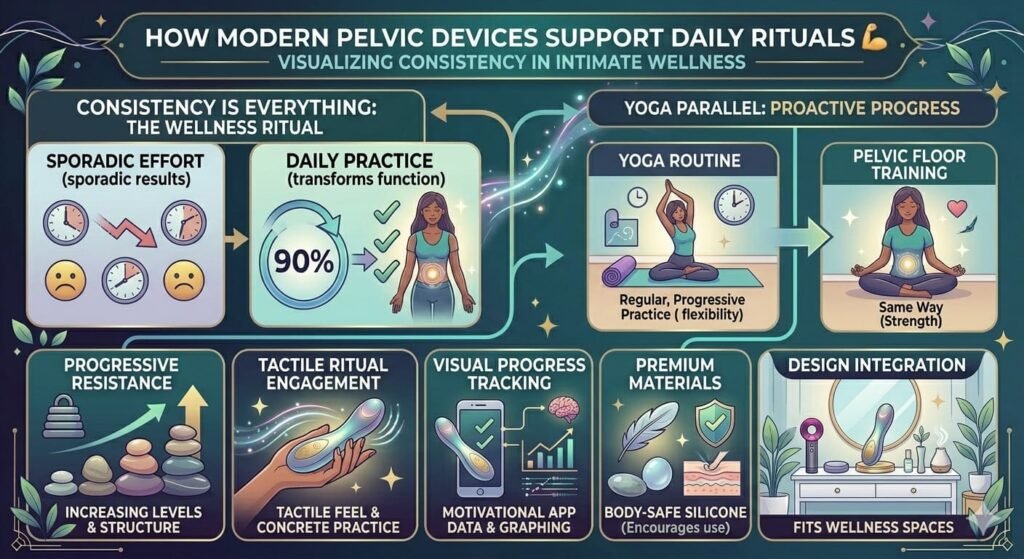
Consistency is everything in pelvic floor training. Sporadic effort produces sporadic results. Daily practice transforms function. But daily practice requires support systems.
🧘♀️ Yoga Parallel: You don't get flexible by doing yoga once a month. You build flexibility through regular, progressive practice. Pelvic floor strength works the same way.
Modern pelvic health devices support daily practice through progressive resistance systems, tactile ritual engagement, visual progress tracking, premium materials that encourage use, and design integration into existing wellness spaces. The best devices make practice feel like self-care rather than exercise, creating positive associations that drive consistency.
Progressive Resistance: Building Strength Systematically 📈
Random effort doesn't build strength. Progressive overload does.
Quality pelvic health devices offer systematic progression:
🔸 Weight Progression
- Start with lighter weights (20-30g)
- Progress to moderate weights (50-70g)
- Advance to challenging weights (80-100g)
- Clear advancement markers
🔸 Time Progression
- Begin with 5-minute holds
- Extend to 10-15 minute sessions
- Build to longer practice periods
- Integrate with other activities
🔸 Complexity Progression
- Static holds (beginner)
- Dynamic contractions (intermediate)
- Combined movements (advanced)
- Integration with other exercises
📊 Evidence-Based Practice: Studies show that progressive pelvic floor training with weighted devices can increase strength by 40-60% over 8-12 weeks. But only if practiced consistently (4-5 times per week).
At VF Pleasure, we design progressive sets specifically for this purpose. Each weight feels distinctly different. Each advancement feels like an achievement.
Ritual Design: Making Practice Irresistible ✨
You're more likely to practice if the experience is pleasant.
Elements that enhance daily practice:
🔸 Tactile Pleasure
- Food-grade silicone feels luxurious, not clinical
- Smooth, warm-to-touch surfaces
- Satisfying weight and presence
- Premium materials you want to handle
🔸 Visual Appeal
- Beautiful enough to keep visible
- Colors that match your wellness space
- Shapes that feel intentional and designed
- Packaging you want to keep and use
🔸 Ritual Markers
- Specific storage (pouches, boxes)
- Preparation rituals (washing, setting up)
- Integration points (after shower, before bed)
- Completion rituals (cleaning, storing mindfully)
🌙 Personal Story: I keep a set of our pelvic health devices in a ceramic bowl on my bathroom shelf. They look like river stones. Every evening after my shower, I take a few minutes for pelvic floor practice. It's become as automatic as brushing my teeth—but only because the devices are beautiful enough to leave out and pleasant enough to use.
Integration with Wellness Tech and Tracking 📱
Modern wellness consumers track everything. Pelvic health should be no different.
Tracking methods that support consistency:
🔸 Low-Tech Tracking
- Wellness journals
- Habit tracking apps (Streaks, Habitica)
- Calendar check-ins
- Progression photos (weight advancement)
🔸 Device-Integrated Tracking
- Smart pelvic trainers with apps
- Strength measurement over time
- Encouraging progress graphs
- Guided programs and coaching
🔸 Community Support
- Online wellness communities
- Yoga studio classes
- Wellness subscription boxes
- Educational content from brands
💡 For Brands: We're seeing sex toy manufacturers integrate wellness tech features into pelvic health devices. Not because it's necessary, but because wellness customers expect their tools to work with their other wellness systems.
Overcoming Consistency Barriers 🚧
Why people stop practicing:
- Forgot: Device is hidden away
- Too clinical: Feels like a medical chore
- No progress feedback: Can't see if it's working
- Uncomfortable: Device causes irritation
- Embarrassment: Feels too sexual or private
How quality devices solve these:
- Beautiful design: Keep it visible as a reminder
- Wellness positioning: It's self-care, not treatment
- Progressive systems: Visible advancement through weights
- Premium materials: Food-grade silicone prevents irritation
- Lifestyle integration: Normalize as part of holistic health
🎯 At our adult toy factory, we test devices with real users before finalizing designs. The feedback consistently shows: devices that look and feel premium get used more consistently than functionally identical devices with clinical design.
Creating Your Personal Practice 🌸
If you're new to pelvic floor training, here's how to start:
Week 1-2: Awareness Phase
- Practice without devices
- Learn proper engagement (squeeze and lift)
- Coordinate with breathing
- 5 minutes daily
Week 3-4: Introduction Phase
- Start with lightest weight device
- 5-10 minute sessions
- Focus on proper form
- 4-5 times per week
Week 5-8: Building Phase
- Progress to next weight
- Extend session time (10-15 minutes)
- Experiment with integration (during meditation, after yoga)
- Daily practice
Week 9+: Maintenance Phase
- Use varied weights
- Maintain daily ritual
- Notice functional improvements
- Celebrate progress
💪 Remember: This is self-care, not punishment. If you miss a day, you haven't failed. Just resume your practice.
🧘♀️ BUILD YOUR PELVIC WELLNESS BRAND: The market for non-medical pelvic health devices is growing rapidly—especially among wellness-conscious women. At VF Pleasure, we help brands create female wellness devices that serve this emerging market. From concept to production, we offer complete OEM/ODM support. Schedule your consultation today →
Conclusion 🌟
Pelvic floor training deserves the same cultural acceptance as yoga, meditation, and other wellness practices. When we position it as proactive self-care rather than reactive treatment, we open the door for millions of women to benefit from stronger, healthier pelvic floors.
Non-medical pelvic health devices make this possible by removing the clinical stigma and creating beautiful tools that fit naturally into wellness routines.
💡 At VF Pleasure, we've spent 15 years perfecting the art of creating devices that people actually want to use. Our expertise in food-grade silicone, aesthetic industrial design, and wellness positioning helps brands bring pelvic health products to markets that would never consider traditional adult toys.
Whether you're a yoga studio owner looking to expand your retail offerings, a wellness brand wanting to add pelvic health devices, or an independent entrepreneur building a holistic health business, the opportunity is clear:
Women need these tools. They just need them positioned in a way that makes sense for their lifestyle.
🌸 LET'S NORMALIZE PELVIC HEALTH TOGETHER
Visit VFPleasure.com to explore:
- 🎨 Our custom design services for wellness-positioned devices
- 📦 Private label and white label options
- 🏭 Our manufacturing capabilities and quality standards
- 💬 Direct contact with our team for personalized consultation
We offer free design consultations for brands serious about entering the wellness-positioned pelvic health market. Our team can help you create products that your customers will be proud to own and excited to use.
🎯 New Client Offer: Request our Pelvic Wellness Design Portfolio plus Material Sample Kit when you schedule your first consultation.