Skip to content
If you spend $3,000 on a custom mold and your factory sells it to your competitor next month, you have a real problem. Mold ownership breaks more brand partnerships than defects ever will.
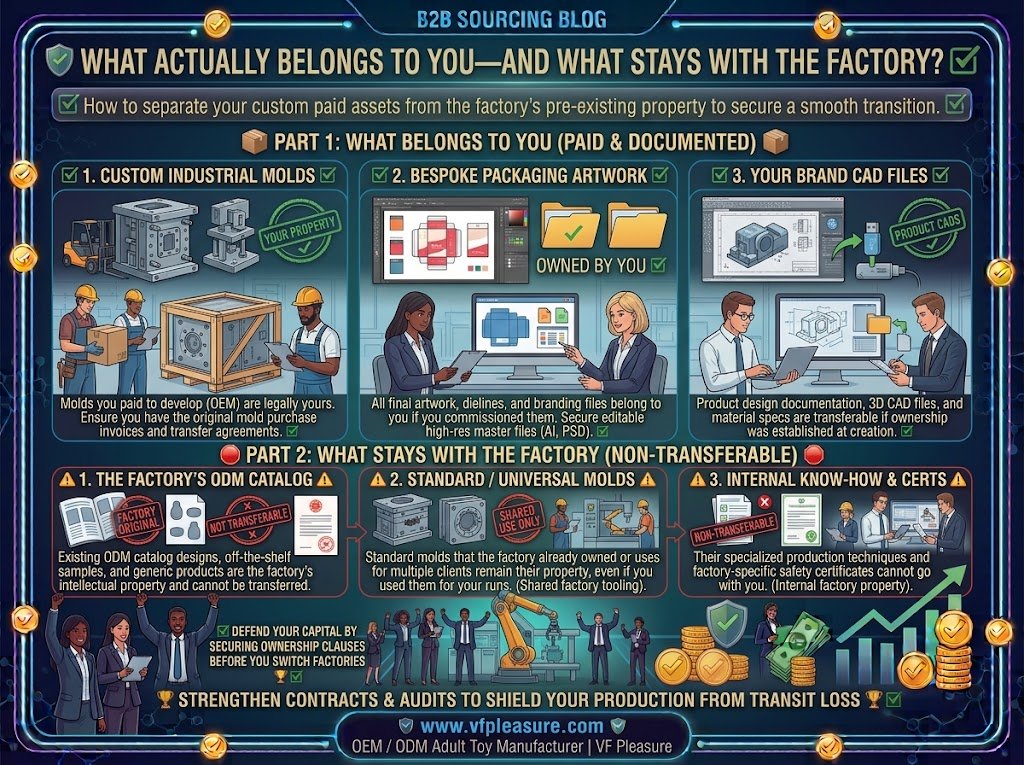
Mold ownership depends on your contract, not on who paid. In most OEM sex toy manufacturing deals, the factory technically owns the tool unless you sign an exclusivity clause or buy the mold outright. Get this in writing before production starts.
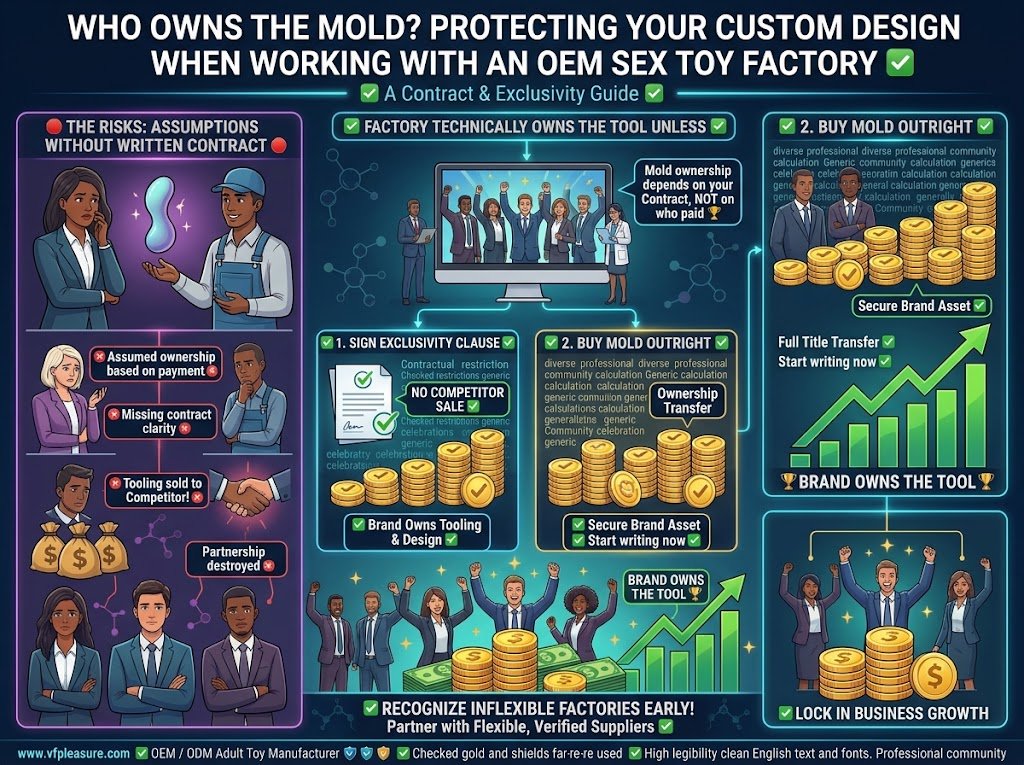
I have watched brand owners get burned on this exact issue. They pay a factory to build a custom vibrator mold, launch their product, then find a nearly identical toy on a competitor's site six months later. It happens more than people admit. Let's break down why this happens and how you stop it before you sign anything.
Why Do Factories Reuse Custom Molds Without Telling You?
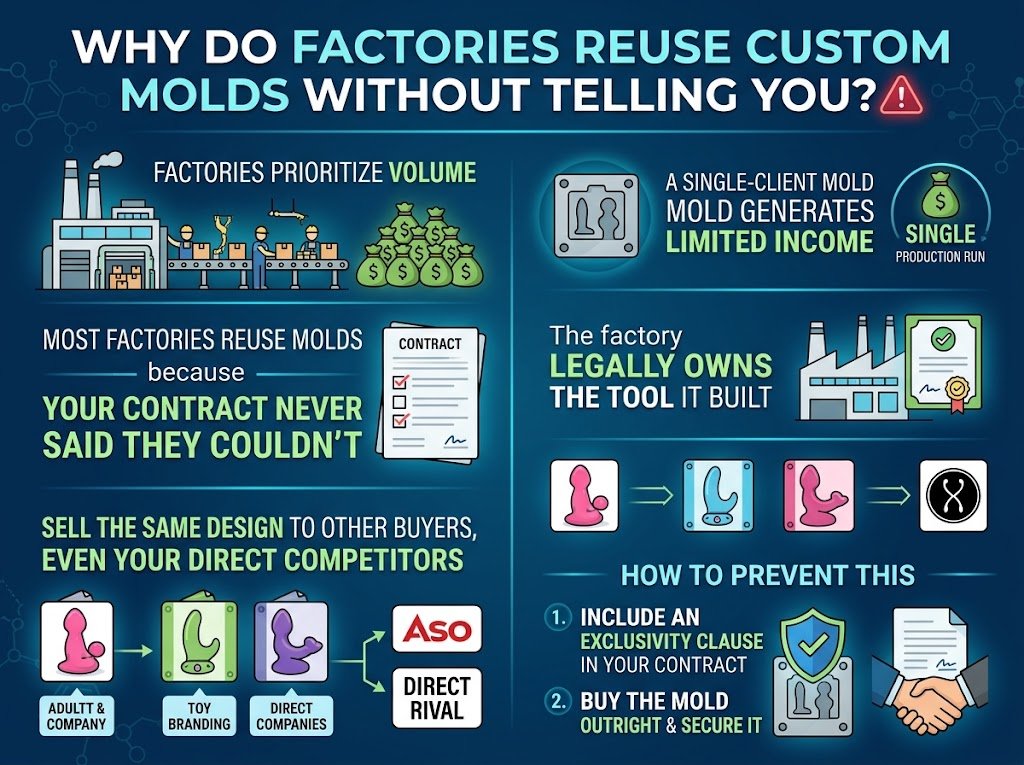
Factories run on volume. A mold that only makes toys for one client is a mold that only earns money once.
Most factories reuse molds because your contract never said they couldn't. Without an exclusivity clause, the factory legally owns the tool it built and can sell the same design to other buyers, even your direct competitors.
The Business Logic Behind Mold Reuse
A mold for a thrusting sex toy or a rabbit vibrator can cost anywhere from $2,000 to $8,000. Factories spread this cost across as many clients as they can, unless you tell them not to.
Here is what typically happens without a clear agreement:
- The factory books your mold fee as a "development cost," not a "purchase."
- The mold stays on factory premises, labeled with an internal code, not your brand.
- Six months later, a new client asks for something similar. The factory pulls your mold and offers a "quick customization."
If your contract does not say "exclusive," assume it is not.
This is not really about dishonest suppliers. It is about factories doing what makes financial sense when nobody said otherwise. A reliable OEM adult toy factory will tell you this upfront rather than let you find out later.
What Should Be in Your Contract to Protect Your Design?
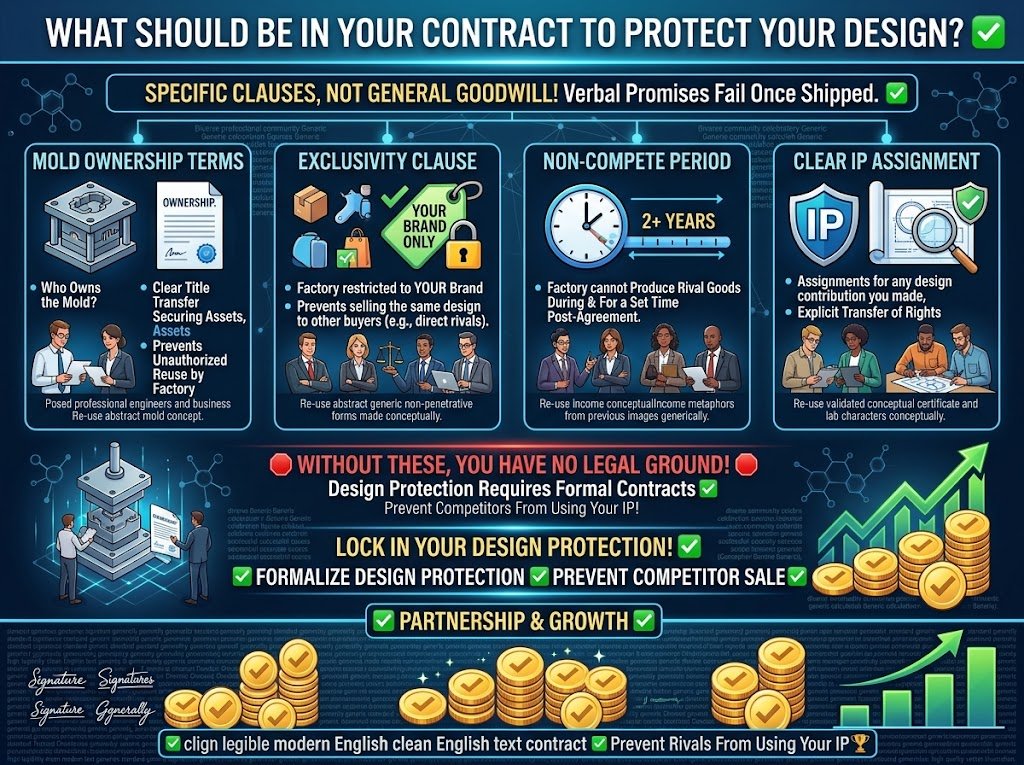
A verbal promise means nothing once your product ships. You need specific clauses, not general goodwill.
Your contract needs four things: mold ownership terms, an exclusivity clause, a non-compete period, and clear IP assignment for any design you contributed. Without these, you have no legal ground to stand on if your design turns up elsewhere.
Breaking Down the Four Clauses
| Clause | What It Does | Why It Matters |
|---|---|---|
| Mold ownership | States who legally owns the physical tool | Decides who controls future use |
| Exclusivity | Bars the factory from selling the same design elsewhere | Protects your market position |
| Non-compete period | Sets a time limit (usually 1-3 years) on reuse restrictions | Gives you a head start in your market |
| IP assignment | Confirms your original design ideas belong to you | Stops the factory from patenting your concept |
I always tell buyers: pay a bit more for mold exclusivity. It usually costs 15-30% more than a shared mold, but it is cheaper than losing your market advantage.
If you are building a full private label line, this matters even more. Check our private label sex toys service page for how we structure these agreements, and read our custom adult toy manufacturing guide for contract templates that work in practice.
Can You Buy the Mold Outright, and Should You?
Some buyers assume owning the mold outright solves every problem. It does solve some, but not all.
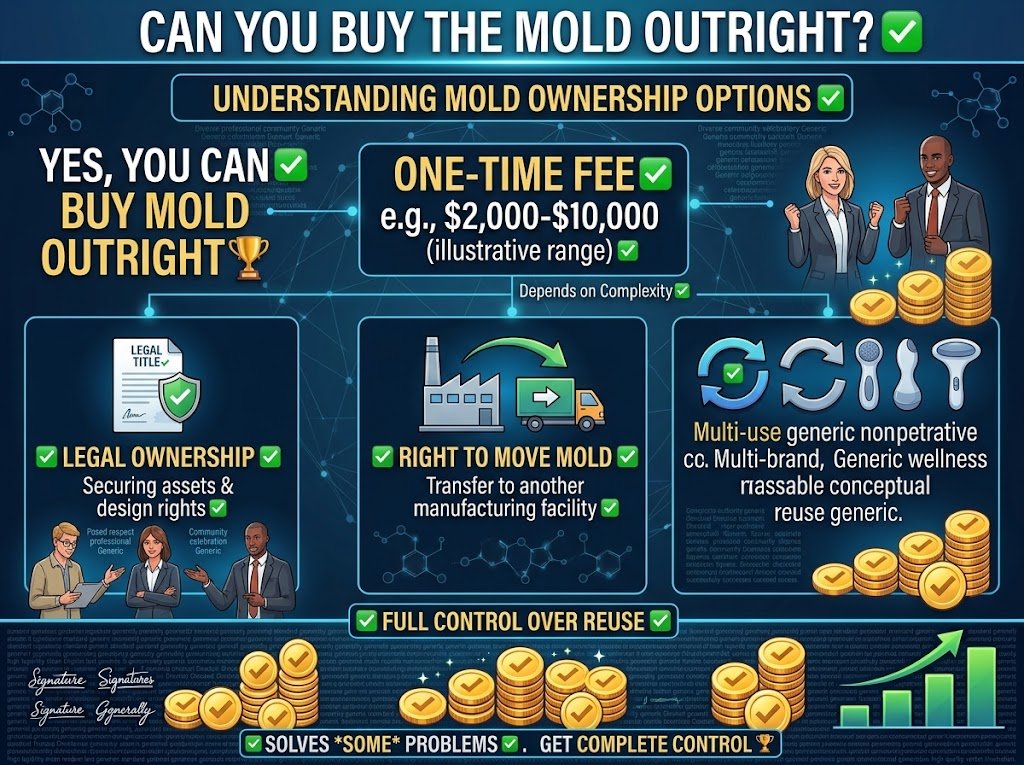
Yes, you can buy the mold outright for a one-time fee, typically $2,000-$10,000 depending on complexity. This gives you legal ownership, the right to move the mold to another factory, and full control over reuse.
The Trade-Offs of Full Mold Ownership
Owning the mold sounds simple. It is not always the smart move for every brand.
Pros of buying outright:
- Full legal control, no ambiguity
- Freedom to switch factories if quality slips
- Stronger position for future licensing deals
Cons of buying outright:
- Higher upfront cost, no shared risk
- You store the tool or pay storage fees if you switch suppliers
- Mold maintenance and repair become your responsibility
For a first custom vibrator or a female clitoral stimulator, I usually recommend exclusivity clauses over outright purchase. Save the outright buy for products already proven in the market, where you plan high-volume, long-term production. This is exactly the kind of decision our OEM/ODM service team walks new clients through before any tooling starts.
How Do You Verify a Factory Will Honor the Agreement?
A signed contract only works if the factory actually respects it. Verification matters as much as the paperwork.
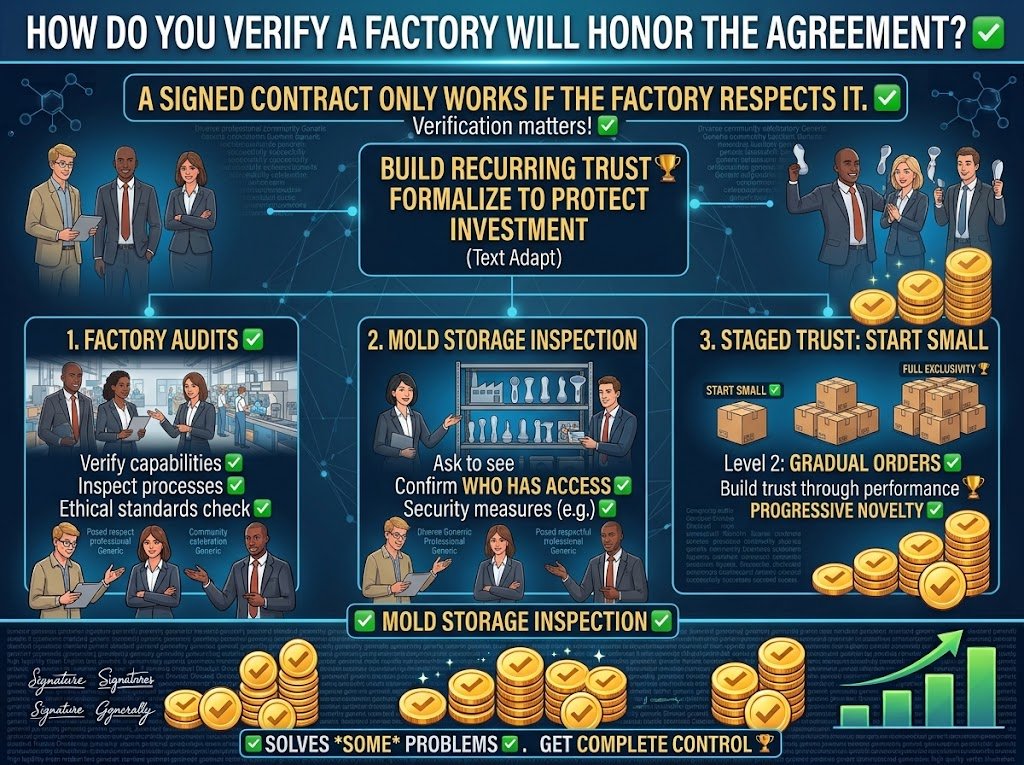
Verify honesty through factory audits, mold storage inspection, and staged trust: start with a small order before committing to full exclusivity. Ask to see where your mold is stored and who has access to it.
Practical Steps to Confirm Compliance
Do not just trust a signature. Build in checkpoints.
- Request mold serial numbers and confirm they match your product, not a generic factory catalog code.
- Ask for video verification of the mold in storage, tagged with your brand name.
- Run a market scan every quarter for similar products from competitors.
- Build a paper trail, keep every email, every design revision, every approval.
Trust is good. Verification is better, especially in an industry where designs travel fast.
Felle, a procurement head sourcing multifunctional adult toys for a major retail chain, told me once that his biggest supplier complaint was not quality, it was surprise duplicates showing up at trade shows. Trade shows like SZI Expo are actually a good place to spot this early, since competitor booths reveal a lot. If you want a deeper checklist on spotting supplier red flags before you sign, our red flags OEM adult toy manufacturer guide covers this in detail.
Does Mold Ownership Affect Your Long-Term Brand Value?
A mold is a small line item on an invoice. Its impact on your brand is not small at all.
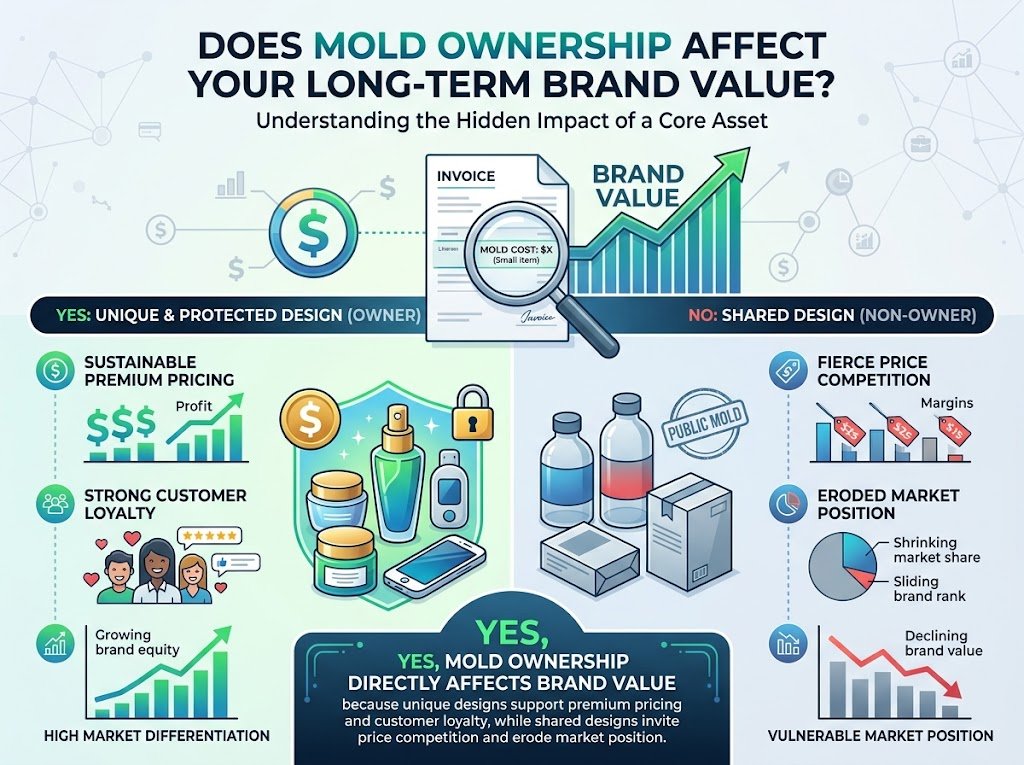
Yes, mold ownership directly affects brand value because a unique, protected design supports premium pricing and customer loyalty, while a shared design invites price competition and erodes your market position.
Why This Ties Into Sexual Wellness Positioning
Buyers today care about more than novelty. Categories like intimate wellness, pelvic health devices, and body massager products for female wellness devices are growing because customers want quality, trust, and self-care value, not just a gimmick.
If your design gets copied, you lose that trust angle fast. A duplicated product weakens your position in fast-growing niches like:
- Menopause devices and pelvic health tools built for long-term intimate wellness
- Multifunctional vibrators marketed under a sexual wellness and self-care brand story
- Couples toys designed for a specific emotional experience, not just function
A factory that respects your mold agreement also tends to respect your broader vision. That is the kind of partner worth keeping. Check our thrusting sex toy supplier checklist and our female sex toys category for examples of how design protection plays into product strategy.
Conclusion
Mold ownership protects your design, your investment, and your brand. Put it in writing before you build anything.