Skip to content
You want to launch a sexual wellness brand but you have no product design experience, no engineering background, and no idea where to start. Every path into the adult toy industry looks like it requires skills you don't have — until you understand white label.
White label adult toys are factory-validated products manufactured to an existing design, built with food-grade silicone materials and full compliance documentation, sold to brand owners who apply their own branding and packaging without designing the product from scratch. Non-designers can launch a credible sexual wellness brand by choosing from an existing ODM catalog, demanding verified body-safe materials, and building brand identity through packaging, positioning, and marketing alone.1
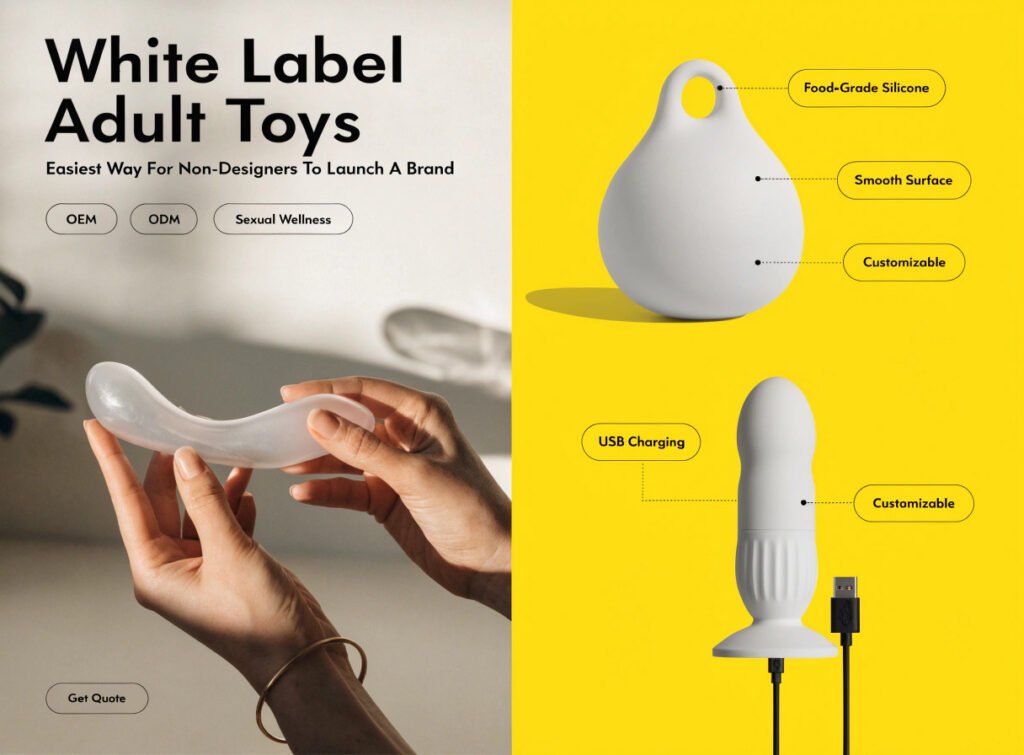
I'm Sally. I run VF Pleasure — a direct adult toys factory in Dongguan, China, with over 15 years of manufacturing experience. At VF Pleasure, we have one manufacturing standard that never changes: we only make food-grade silicone products. Every body-contact surface on every product we build — from vibrators to body massagers to couples toys — uses food-grade platinum silicone. That is our baseline. No exceptions, no cheaper alternatives for lower-budget orders.
I've helped hundreds of brand founders enter the adult novelty wholesale market. Some had deep product design backgrounds. Most did not. The ones who launched fastest, with the least capital risk, and the clearest brand identity were almost always the white label starters — people who chose a proven factory design, put their brand story on it, and spent their energy where they were actually strong: marketing, community building, and customer experience.
This guide explains exactly how white label works, which products to start with, what quality standards to demand, and how to build a brand identity that makes your product feel uniquely yours — even when the design came from a factory catalog. Our white label sex toys business guide and what are white label sex toys pages cover the foundational definitions in more detail — this article goes deeper into the practical launch path for non-designers specifically.
- 1 What Is White Label in Adult Toys — and How Is It Different From OEM?
- 2 Why Is White Label the Lowest-Friction Brand Launch for Non-Designers?
- 3 Which White Label Products Should a New Adult Toy Brand Start With?
- 4 How Do You Choose a White Label Adult Toy Factory Without Design Skills?
- 5 What Quality Standards Must Your White Label Brand Demand?
- 6 What Real Production Problems Could Derail Your White Label Launch?
- 7 How Do You Build a Real Brand Identity With White Label Products?
- 8 Conclusion
- 9 References & Source Notes
What Is White Label in Adult Toys — and How Is It Different From OEM?
Most people entering the adult toy market hear three terms that sound similar but mean very different things: white label, private label, and OEM. The confusion between them leads to wrong factory choices, unexpected costs, and launch timelines that stretch far beyond what a non-designer planned for.
White label adult toys use an existing factory-designed product — already engineered, tested, and compliant — where the buyer applies their brand identity to the packaging and outer presentation without modifying the product design. OEM requires the buyer to bring a design brief for a custom product. ODM sits between both, allowing the buyer to select from a factory's catalog and request moderate customisation such as color, finish, or accessory variation.1
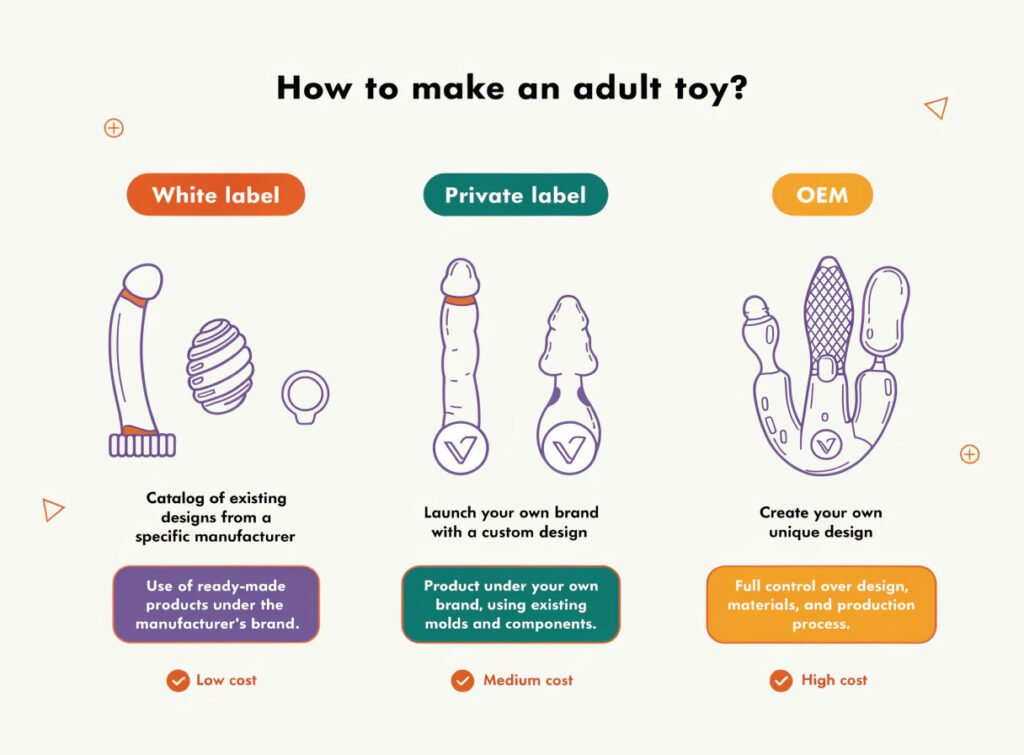
Understanding where white label fits in the manufacturing spectrum is the first decision a non-designer needs to make — because it determines your timeline, your capital requirement, and how much design input you actually need.
🏷️ The Three Manufacturing Models Side by Side
| Model | Who Designs the Product | Lead Time to First Unit | Capital Required | Best For |
|---|---|---|---|---|
| White label | Factory (existing validated design) | 2–4 weeks | Lowest | Non-designers launching fast |
| ODM | Factory (with buyer customisation) | 4–8 weeks | Moderate | Buyers wanting some product differentiation |
| OEM | Buyer brings full design brief | 8–16 weeks | Highest | Experienced buyers wanting exclusive products |
White label is the entry point — not because it produces inferior products, but because the product engineering has already been done. The mold exists. The waterproof test has been passed. The food-grade silicone compound has been selected and documented. The CE declaration has been filed. You are entering a supply chain that is already working — and attaching your brand to it.
🔄 Why White Label Is Not the Same as Dropshipping
This is the most important distinction I want to make early. White label is not dropshipping with a sticker on it. When you white label with a real adult toy manufacturer:
- You own the inventory — you hold physical stock with your brand on it
- You own the compliance documentation — the CE declaration names your brand, not the factory
- You own the customer relationship — returns, reviews, and brand trust all sit with you
- You choose the packaging — your brand story, your visual identity, your positioning language
Dropshipping gives you none of these. White label gives you all of them — without requiring you to design the product that makes them possible. Our stop dropshipping sex toys and switch to OEM guide explains this distinction in full detail.
💡 The practical implication for non-designers: White label means you skip the hardest, most technical part of product development — engineering, material selection, tooling, and compliance testing — and focus entirely on the part you are likely better at: brand building, marketing, and customer experience.
Why Is White Label the Lowest-Friction Brand Launch for Non-Designers?
Most people who want to launch a sexual wellness brand are marketers, community builders, wellness practitioners, or entrepreneurs — not product engineers. The white label model was built for exactly this profile. It removes every barrier that requires technical knowledge and leaves only the barriers where your existing skills apply.
White label adult toys are the lowest-friction brand launch for non-designers because the factory has already solved every technical problem — product design, material selection, compliance testing, and waterproof validation. The non-designer's job is brand identity, packaging design, positioning language, and marketing. These are exactly the skills that build a long-term sexual wellness brand — and none of them require engineering knowledge.2
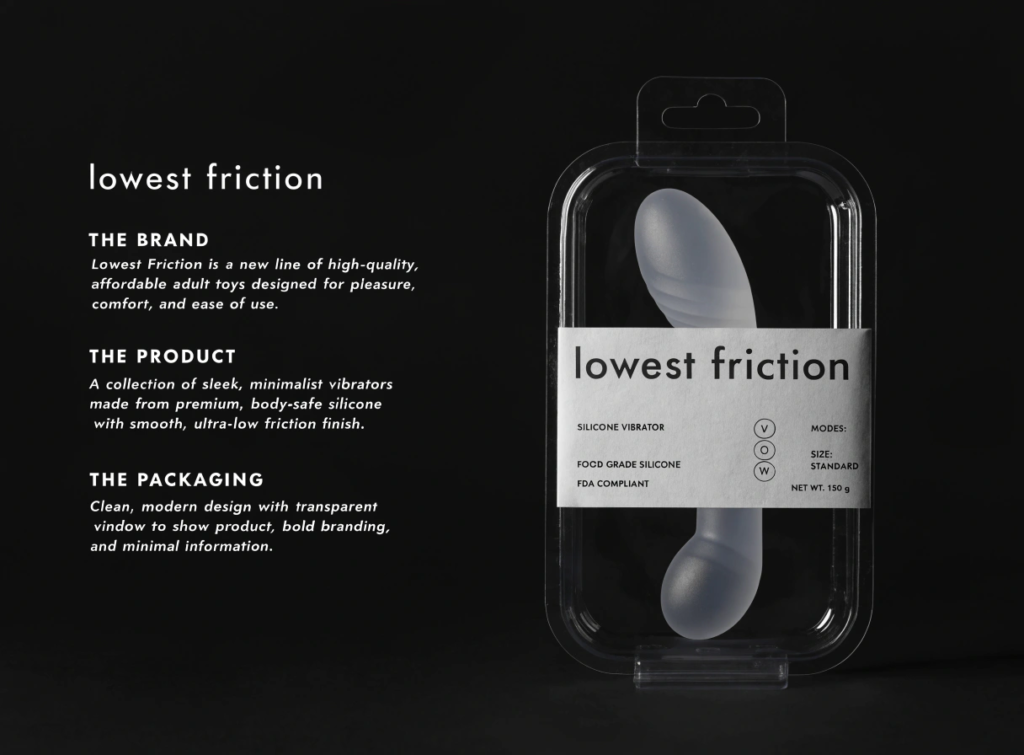
Here is a direct comparison of what a non-designer does and does not need to know in a white label vs OEM launch — and why the difference matters for your confidence, your timeline, and your capital.
✅ What a Non-Designer Does NOT Need to Know for White Label
| Technical Area | Why It's Removed in White Label | Who Handles It |
|---|---|---|
| Product CAD design | Factory's existing mold is already validated | Factory engineering team |
| Silicone compound selection | Factory's food-grade silicone spec is already tested | Factory materials team |
| Waterproof architecture | IPX7 validation already passed and documented | Factory QC team |
| CE and RoHS compliance | Technical file already exists — buyer gets a re-declaration | Factory compliance team |
| Motor and PCB specification | Component spec already locked and production-tested | Factory sourcing team |
| Mold tooling investment | Existing mold — no tooling cost for white label buyers | Factory tooling team |
✅ What a Non-Designer DOES Need to Handle for White Label
- Brand name and visual identity — your logo, color palette, and brand personality
- Packaging design — the box, insert card, and outer presentation that tells your brand story
- Positioning language — how you describe the product to your specific audience
- Marketing and distribution — how you find customers and bring them to your store
- Compliance re-declaration — your CE Declaration of Conformity lists your brand name as the responsible party (your factory provides the technical file)
- Customer service — your brand, your relationship, your reputation
The second list is a marketing and business list — not an engineering list. If you can run a brand, you can handle this list. The factory handles the first one entirely.
💰 The Capital Advantage for Non-Designers
White label with a low MOQ program from a reputable adult toy wholesaler or sex toy factory allows test orders of 50–200 units. At $12–25 per unit manufacturing cost and $55–100 per unit retail, a 100-unit test order generates $5,500–$10,000 in potential revenue from a $1,200–$2,500 investment. No tooling. No design fees. No compliance testing costs. The factory absorbs all of those — because they already paid them to develop the product.
Our buy adult novelties wholesale low MOQ guide and 5 tips for affordable private label guide walk through the exact capital planning for a first white label order.
Which White Label Products Should a New Adult Toy Brand Start With?
The white label adult toy market covers hundreds of product types. For a first-time brand founder without design experience, the wrong product choice creates positioning confusion, compliance complexity, or a customer return rate that tanks your brand before it finds its footing. The right first product is the one that is easiest to position, easiest to sell to your specific audience, and easiest to defend from a compliance documentation standpoint.
The best white label adult toy products for non-designer brand founders to start with are body massagers, clitoral stimulators, and single-function rechargeable vibrators — because all three have clear consumer demand, well-established positioning language in the sexual wellness and self-care market, and straightforward compliance documentation profiles. They retail between $45–100 and give a new brand the clearest path from first order to profitable reorder.3
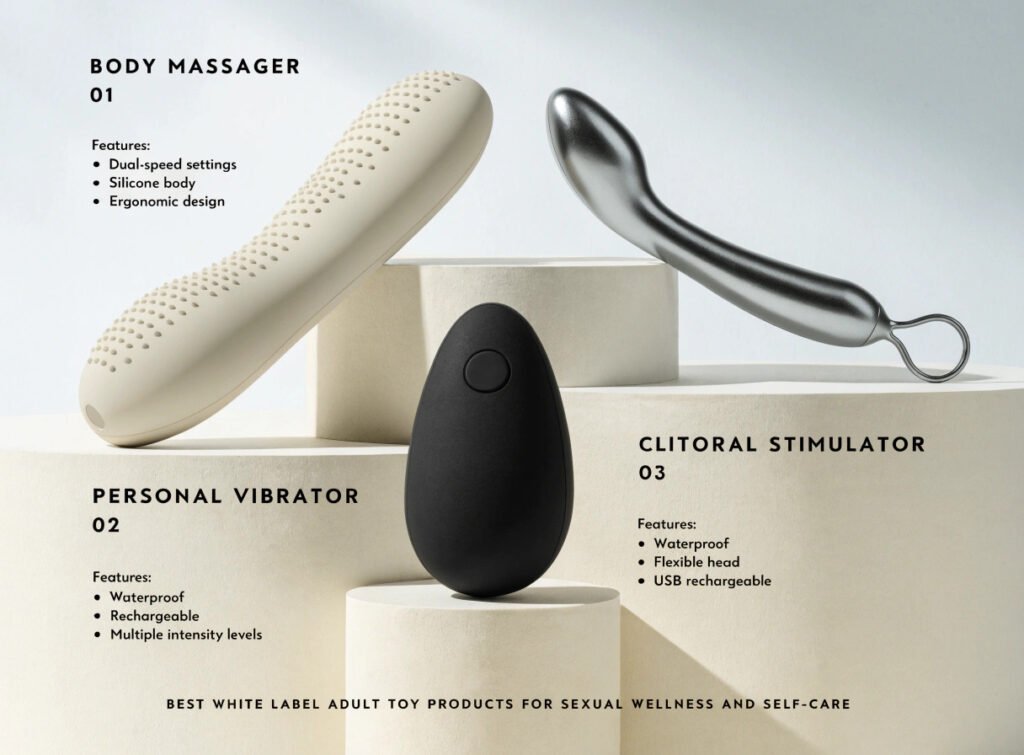
Here is my first-product selection guide — built from 15 years of watching brand founders succeed and fail with their initial SKU choices.
🛁 Product Category 1 — Body Massagers: The Broadest Entry Point
A body massager is the single most versatile first product for a non-designer white label brand. It positions naturally across multiple audience segments — women's self-care, recovery wellness, intimate wellness, and menopause support — without requiring explicit adult product positioning on every channel.
A food-grade silicone body massager with multiple vibration modes, IPX7 waterproof rating, and USB-C rechargeable charging retails at $55–90 in a self-care framing. It sits comfortably alongside clean beauty products, wellness supplements, and yoga accessories on your store — which broadens your potential retail channel beyond adult novelty platforms. Our female sex toys range includes multiple body massager candidates with full compliance documentation available from day one.
💜 Product Category 2 — Clitoral Stimulators: The Highest-Demand Entry
The clitoral stimulator category is currently one of the highest-growth product segments in the adult novelty wholesale market. Consumer demand is high. Search volume is strong. And the product category has clear, established positioning language that works across social media, email, and direct-to-consumer e-commerce without the compliance ambiguity of some other adult product categories.
A food-grade silicone suction or pressure-wave stimulator with a validated compliance package retails at $60–110. For a non-designer white label brand, this product gives you a clear audience (women aged 25–55 interested in sexual wellness and intimate self-care), a clear price point, and a factory-validated design that does not require any engineering input from you. Our clitoral suckers vs G-spot vibrators sales guide and best clit suckers 2025 guide explain the demand landscape in detail.
🌸 Product Category 3 — Single-Function Rechargeable Vibrators: The Most Recognizable Category
A vibrator is the most recognizable product in the adult toy market. For a non-designer white label brand, starting with a single-function rechargeable vibrator — bullet vibrator, G-spot vibrator, or wand massager — gives you a product with the highest category brand recognition and the simplest compliance profile. One function, one motor, one charging system. Fewer engineering variables means fewer compliance risks, fewer after-sales issues, and a cleaner customer experience from unboxing onward.
📊 First-Product Selection Guide for Non-Designer White Label Brands
| Product Category | Positioning Language | Target Audience | Retail Price | Compliance Complexity |
|---|---|---|---|---|
| Body massager | Recovery, relaxation, intimate wellness | Broad — wellness, self-care, intimacy | $55–90 | Low |
| Clitoral stimulator | Self-care, sexual wellness, intimacy | Women 25–55, wellness-oriented | $60–110 | Moderate |
| Single-function vibrator | Intimacy, pleasure, self-care | Broad adult wellness audience | $45–85 | Low |
| Pelvic health device | Pelvic floor, postpartum, menopause | Women 30–55, health-focused | $65–120 | Moderate |
| Couples toy | Intimacy, connection, relationship | Couples, premium wellness | $75–130 | Moderate |
💡 Sally's recommendation for your first white label SKU: Start with one product in the body massager or single-function vibrator category. Prove your brand's ability to acquire customers, convert at your target price point, and manage the customer experience. Add category complexity — multi-function products, pelvic health devices, couples toys — once your first SKU is profitable and reordering.
How Do You Choose a White Label Adult Toy Factory Without Design Skills?
Here is the core fear I hear from non-designer brand founders: "If I don't know what to look for in a product design, how do I know whether the factory's product is actually good?" This fear is valid. And it points to the most important truth about white label factory selection: you are not evaluating the product design — you are evaluating the factory's documentation, its engineering track record, and its compliance proof. Those are things anyone can read and verify — no design skills required.
A non-designer selects a white label adult toy factory by evaluating five things that require no product design knowledge: the factory's food-grade silicone documentation per SKU, their CE and RoHS compliance files for each electronic product, their IPX7 waterproof test records with real-use simulation conditions, their documented engineering problem-resolution cases, and their custom packaging capability at low minimum order quantities.4
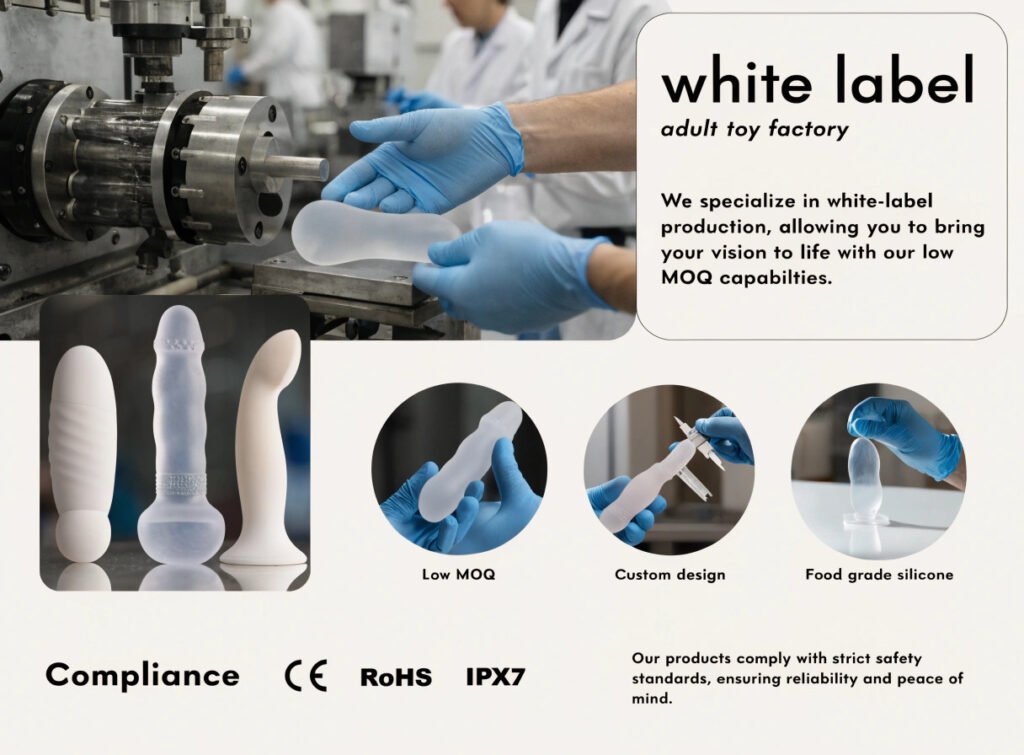
Here is the factory evaluation checklist I give to every non-designer white label client before they contact their first factory candidate.
📋 The Non-Designer Factory Evaluation Checklist
Step 1 — Ask for food-grade silicone documentation per SKU
The most important question you will ever ask a factory is: "Can you provide a third-party food-grade silicone migration test report — from a named, accredited laboratory — for this specific product, not just for your silicone material batch?"
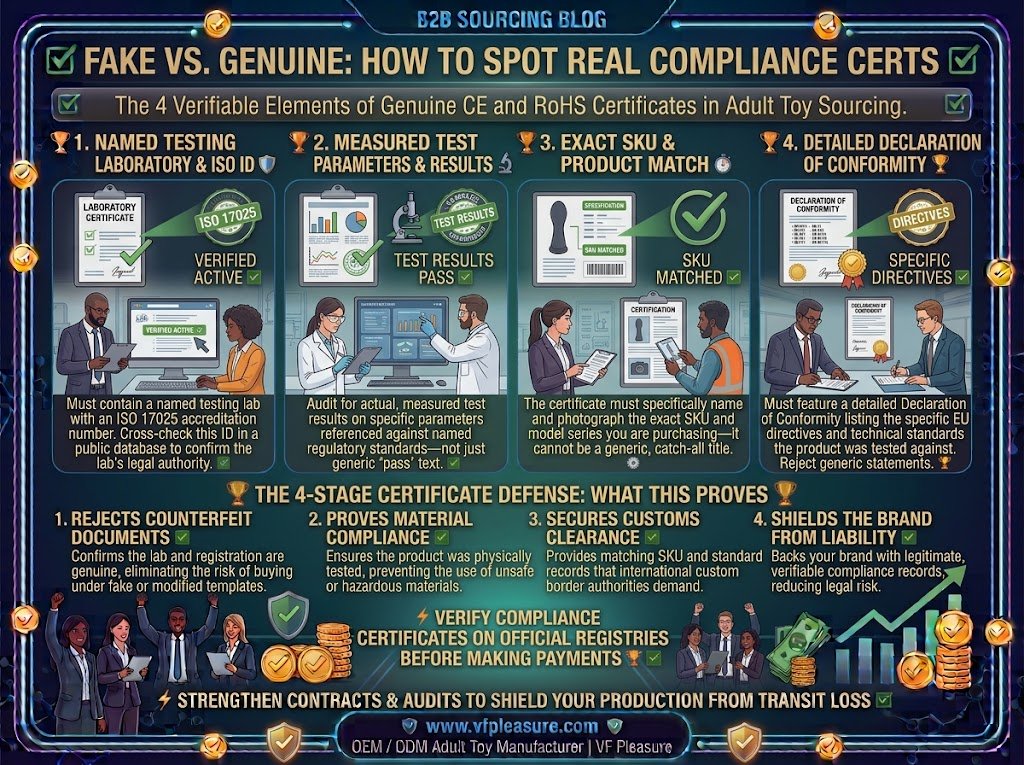
A real food-grade platinum silicone test report includes a laboratory name and accreditation number, a sample reference ID tied to the specific product, the test method used (such as EN 71-3 or FDA CFR 21), measured migration results for key compounds, and a pass/fail determination against the applicable regulatory threshold.
A one-page PDF with a logo and a tick mark is not a test report. It is a template. At VF Pleasure, we only manufacture food-grade silicone products — and we provide the named third-party documentation to verify it per product line. This is our baseline, not a premium tier. Our body-safe adult toys manufacturing standards guide and choose silicone sex toy manufacturer guide explain exactly how to read and validate this documentation.
Step 2 — Request CE and RoHS compliance documentation
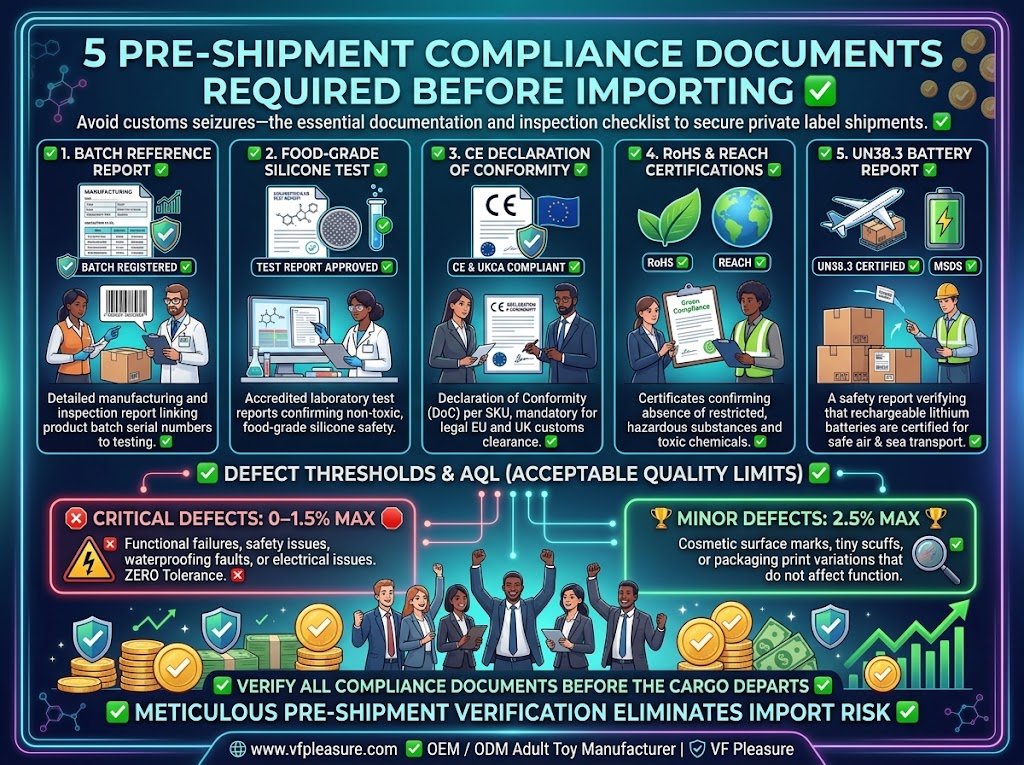
Every electronic adult toy sold in the EU market legally requires a CE Declaration of Conformity. For a non-designer brand founder, this document does two things: it confirms that an independent test laboratory has validated the product's electrical safety, and it gives your retail buyers and platform accounts the compliance evidence they need to list your product without risk.
Ask the factory: "Can you provide a CE Declaration of Conformity and RoHS compliance certificate for this product — with the technical file available if requested by customs or a retailer?" A factory that cannot produce this documentation cannot support your brand in regulated markets.
Step 3 — Confirm custom packaging capability at your MOQ
For a non-designer white label brand, the packaging is your primary creative contribution. Your brand name, logo, color palette, copy, and product positioning all live on the box. Confirm that the factory's low MOQ program includes full custom packaging design — not just a label on a generic box.
At VF Pleasure, our low MOQ white label program starts from 50–200 units with full custom branded packaging included. Our private label sex toys program and wholesale private label adult products guide 2025 document the full packaging development process in detail.
Step 4 — Ask for documented engineering problem cases
A white label buyer cannot evaluate a factory's engineering quality through product design review. But you can evaluate it through their problem-resolution record. Ask any factory candidate: "Can you show me three or four documented cases of production problems you solved for a client — with the problem, the solution, and the delivery outcome?"
A factory that can answer this question with specific, written cases has the engineering discipline and communication transparency that protects your brand launch. A factory that cannot answer it is asking you to trust a claim with no evidence behind it.
What Quality Standards Must Your White Label Brand Demand?
One of the most common mistakes non-designer white label founders make is assuming that because the factory chose the product design, the factory also takes responsibility for quality if something goes wrong. That is not how it works. When your brand name is on the packaging, your brand takes the reputational hit for any product failure — regardless of who designed it. This is why demanding the right quality standards is your most important pre-order decision.
Non-designer white label adult toy brands must demand three quality standards as non-negotiables before any order is placed: food-grade platinum silicone with a named third-party migration test report per SKU, CE and RoHS compliance documentation with a full technical file, and IPX7 waterproof certification validated under real-use simulation — not just static submersion conditions. These three standards protect your brand from returns, compliance penalties, and platform delisting.5
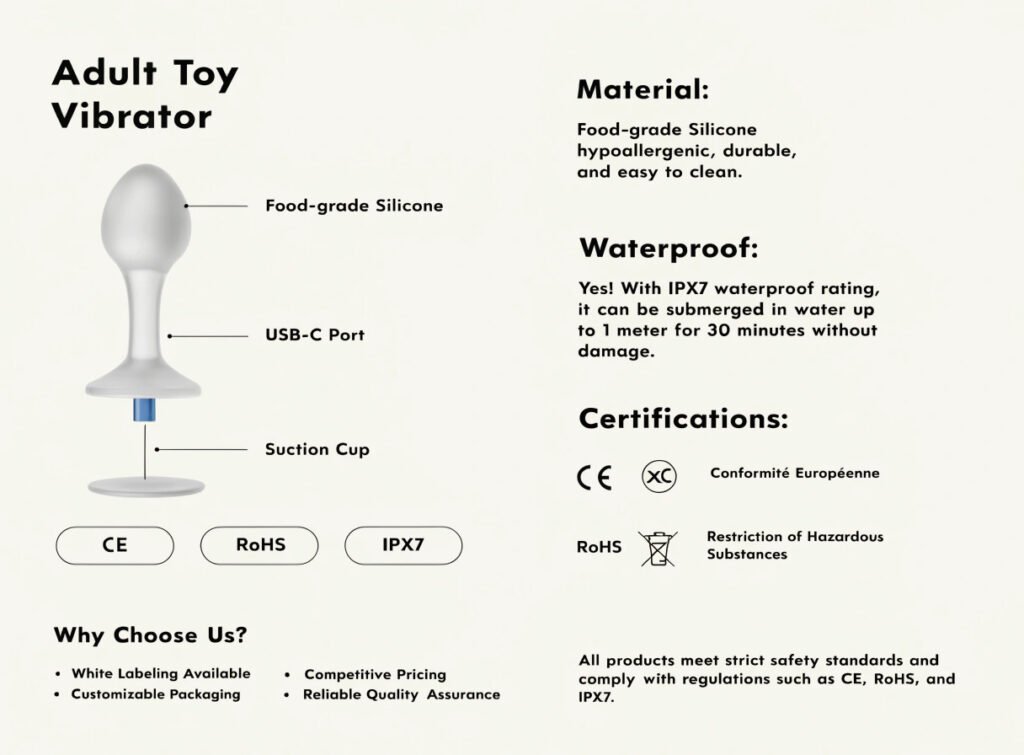
Here is what each standard means in practice — and why each one is non-negotiable for a brand that will carry your name.
🧬 Food-Grade Platinum Silicone: The Material Your Brand Story Rests On
The word "silicone" on a product listing is nearly meaningless as a quality signal. Silicone covers a wide spectrum — from commodity industrial grades to food-grade platinum-cured silicone. The difference matters enormously for body-contact products. Here is the comparison that matters:
| Silicone Type | Purity Level | Phthalate-Free | Third-Party Verifiable | Body-Safe Claim Strength |
|---|---|---|---|---|
| Food-grade platinum-cured | Highest | ✅ Yes | ✅ Named lab migration test | Strong — verifiable |
| Peroxide-cured | Moderate | ✅ Usually | ⚠️ Harder to verify | Moderate |
| Commodity/industrial grade | Low | ❌ May contain additives | ❌ Rarely tested | Weak — unverifiable |
At VF Pleasure, every body-contact surface we produce is food-grade platinum silicone — the top row in that table, every time. We do not offer a commodity silicone tier at lower cost. If a brand asks whether they can save money by using a lower silicone grade, our answer is no — because the risk that lower grade silicone creates for their customer and their brand is not one we are willing to manufacture.
For a non-designer white label brand, this standard is especially important. You did not design the product. Your customer trusts that you verified what is in it. A food-grade silicone migration test report from a named accredited laboratory is how you prove that you did. Our material transparency sourcing guide and eco-friendly adult novelty products materials guide explain the full material verification process.
🏅 CE and RoHS: The Compliance Documents Your Platform Accounts and Retail Buyers Will Ask For
CE certification is the legal requirement for placing any electronic product on the EU market. For a non-designer white label brand, CE compliance is your market access credential. Without it, EU e-commerce platforms can delist your product, customs can hold your shipment, and health-focused retail buyers will not take your meeting.
RoHS compliance confirms that the electronic components inside your product meet hazardous substance restrictions. Together, CE and RoHS tell your customer and your distribution partners that this product has been independently verified as safe for the markets it is sold in.
💡 Sally's note from 15 years on the production floor: The non-designer white label brands that grow fastest are the ones that invest in their compliance package before their first sale — not after. Platform compliance teams, wholesale buyers, and wellness retailers ask for documentation on first contact. If you have it ready, you convert. If you don't have it ready, you lose the account.
💧 IPX7 Waterproof: Validated Under Real-Use Conditions
IPX7 is the waterproof rating that allows your product to be described as safe for bath and shower use. For a self-care positioned sexual wellness brand, this is often your primary use-case claim. But "IPX7 rated" on a factory spec sheet is not the same as "IPX7 validated under real-use conditions."
Real-use simulation means the product has been tested with insertion cycles before submersion — mimicking how a customer actually uses the product before taking it into the bath. Static submersion alone does not catch the sealing weaknesses that real use creates. Ask your factory specifically: "Was your IPX7 certification validated under pre-use simulation conditions?" Our adult toy quality compliance guide explains how to verify waterproof testing methodology from a factory's documentation.
What Real Production Problems Could Derail Your White Label Launch?
White label removes the product design burden — but it does not remove the production risk. A non-designer white label brand is still fully exposed to quality failures, compliance gaps, and delivery delays if the factory does not actively manage its production problems before they reach shipment. And because you did not design the product, you have no engineering baseline to evaluate whether the factory's solution to a production problem is a real fix or a short-term patch.
The production problems most likely to derail a non-designer white label brand launch are: waterproof seal failures that surface after shipment as returns, motor performance drops from unvalidated component substitutions, charging reliability failures from design flaws the factory never disclosed, material compliance gaps that conflict with your brand's body-safe claims, and documentation misalignments that delay your shipment at customs. All five are preventable — but only at a factory with genuine engineering problem-solving discipline.6
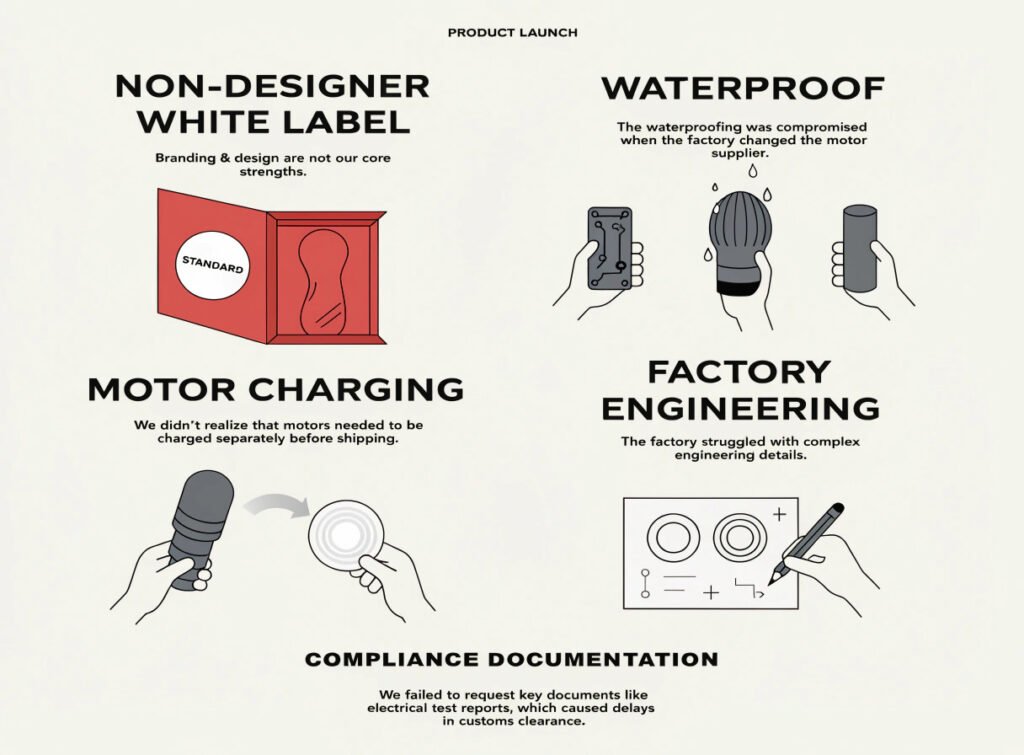
At VF Pleasure, we document the engineering challenges we solve for our partners. These five cases are real — and they are the standard you should ask every factory candidate to match before you place your first deposit.
🧪 Case 01 — Waterproof Seal Failure Under Updated Real-Use Testing
One of our partners updated their IPX7 testing protocol to include pre-use simulation — insertion cycles before the submersion test. The existing product, originally validated under static submersion only, failed the updated standard.
A factory protecting its own schedule would have suggested downgrading the waterproof claim on the packaging — a change that would have required a full product relisting, triggered a CE re-declaration, and permanently weakened the brand's self-care positioning. We took a different path: we analyzed the sealing architecture, identified specific assembly sequence weaknesses, redesigned the internal waterproof structure, optimized sealing consistency across the production line, and ran repeated internal validation before formal resubmission.
The product passed the updated IPX7 standard. No external redesign. No shipment delay. No brand impact.6
💡 Why this matters for your white label brand: A waterproof failure in your customer's bath is your brand's one-star review — not the factory's. You did not design this product. Your customer does not know or care. They know your brand name — and they leave it in the review. Solve it at the engineering level before it ever reaches them.
⚙️ Case 02 — Motor Performance Drop Under Supply Chain Cost Pressure
A key motor component cost spiked significantly due to supply chain disruption. Rather than silently substituting the nearest available part — the shortcut that produces "this one isn't as powerful as my last order" reviews — we benchmarked multiple alternative motors against the original's vibration strength, operational noise, and long-term stability profile.
We selected the replacement that maintained performance consistency within the partner's premium sexual wellness brand positioning. The product reached retail with no detectable change in performance. The brand's pricing power was fully protected.6
💡 Why this matters for non-designers: You cannot catch a silent motor substitution at product inspection without specialist equipment. Your only protection is a factory with the engineering discipline and communication culture that does not make silent substitutions. Ask factories directly: "Have you ever substituted a component without client notification? What was the outcome?"
🔌 Case 03 — Charging Reliability Failure from a DC Pin Design Flaw
Post-production customer feedback flagged intermittent charging failures across a product batch. We traced the root cause to DC pin contact geometry — specifically how pin length interacted with the silicone body's natural flex under repeated use cycles.
We evaluated pin length and structural tolerance, tested extended pin design variants under simulated use conditions, and confirmed long-term durability under accelerated testing. The resolution was a structural engineering fix — not a warranty replacement program. An unresolved charging failure would have generated persistent customer complaints, damaged review profiles, and ongoing after-sales cost — all under your brand name.6
🎨 Case 04 — Color Fastness Compliance Failure After a QA Standard Update
Updated QA standards required higher color fastness performance on silicone and ABS surfaces. Several SKUs in a client's range failed the new criteria. Rather than shipping under the previous standard, we reviewed the full surface treatment process, replaced specific treatments with compliant alternatives, conducted internal validation, and re-submitted. Every SKU passed. No large-scale production rejection. No retail delisting. No customs hold under your brand's import documentation.6
🔄 Case 05 — Batch Code and Inspection Timeline Misalignment
An adjusted delivery schedule created a mismatch between batch codes and inspection dates, with packaging and product marking already completed. Rather than leaving this as an unresolved documentation gap, we documented the full production and inspection timeline with complete traceability, communicated proactively with the client before the inspection date, and provided written QA explanation for the inspector.
The documentation was accepted without rework. Delivery was maintained on schedule. For a non-designer white label brand managing its first customs clearance, a batch code discrepancy at inspection is the kind of problem that causes two-to-three week delays — unless your factory resolves it before the inspector opens the file.6
🧠 Five Cases — One Standard to Demand from Every Factory
| Production Problem | Your Brand Risk If Unresolved | How VF Pleasure Resolved It |
|---|---|---|
| Waterproof seal failure | Returns, one-star reviews, CE re-declaration | Internal structural redesign |
| Motor substitution | "Weaker product" reviews, pricing power erosion | Full component benchmarking |
| Charging contact failure | Persistent complaints, after-sales cost | DC pin structural engineering |
| Color fastness non-compliance | Platform rejection, customs hold | Proactive surface treatment replacement |
| Batch code documentation gap | Customs delay, QA failure | Transparent timeline documentation |
Ask every factory candidate to show you five documented cases like these — with specific problems, solutions, and delivery outcomes. A factory that can do this has the engineering discipline and communication culture that protects your white label brand. Our adult toy manufacturing challenges and solutions guide and crafting high-quality adult toys guide explain in detail what engineering accountability looks like at a professional sex toys factory.
How Do You Build a Real Brand Identity With White Label Products?
Here is the question I get most often from non-designer white label founders: "If the product design is someone else's, is my brand even real?" My answer — after 15 years of watching brand founders succeed and fail across the adult novelty wholesale market — is a clear yes. The product is the vehicle. The brand is the destination. And the brand is entirely yours.
A non-designer white label brand builds a genuine, defensible identity through five elements that have nothing to do with the product design: packaging and unboxing experience, positioning language that resonates with the specific audience, a body-safe material story built around verified food-grade silicone claims, photography and visual identity that reflects the brand's values, and a customer education approach that positions the brand as a trusted sexual wellness voice — not just a product listing.7
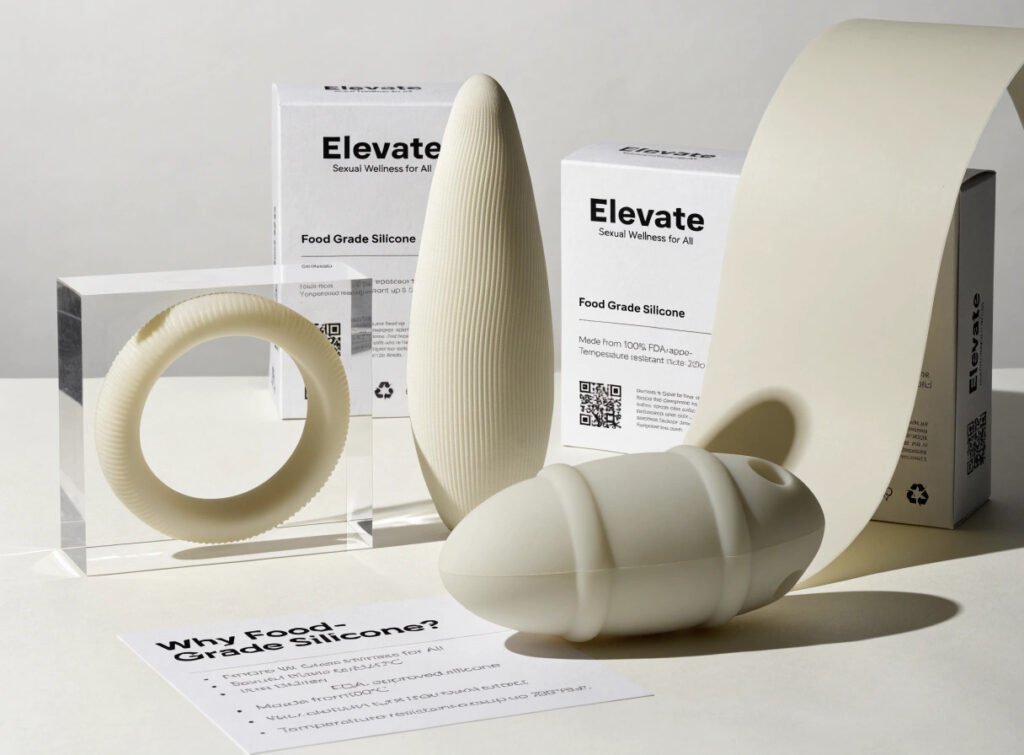
Your customer never sees the factory. They see your packaging, read your copy, experience your unboxing, and feel the product in their hand. Every one of those touchpoints is yours — and every one of them is where your brand is built or lost.
📦 Element 1 — Packaging as Your Primary Creative Investment
For a white label brand, the packaging box is your most important design decision. It is your customer's first physical contact with your brand. It sets the expectation for what is inside. It communicates your material standards, your brand values, and your pricing position before the product is even opened.
For a sexual wellness brand positioning on food-grade silicone and body-safe intimacy products, your packaging should include:
- ✅ Your brand name and logo — prominently placed, consistent with your digital identity
- ✅ Material callout — "Food-grade platinum silicone" as a visible claim, not buried in the small print
- ✅ Compliance indicators — CE mark, RoHS symbol, waterproof rating — small but present
- ✅ Positioning language — "Designed for intimate self-care" / "Body-safe, phthalate-free" / "Your self-care ritual, elevated"
- ✅ Insert card — brand story, usage guide, and care instructions in your brand voice
- ✅ QR code — linking to your website or a product care page that deepens the brand relationship
Our private label adult products development process guide covers the full packaging development workflow, from artwork brief submission to production approval sign-off.
🗣️ Element 2 — Positioning Language That Makes a Commodity Feel Premium
Two brands can sell the exact same white label vibrator at wildly different price points — if their positioning language creates different perceived value. The brand that says "rechargeable vibrator" competes on price. The brand that says "a food-grade silicone self-care tool designed for intentional intimate wellness — CE-certified, body-safe, and made to last" competes on trust, values, and brand relationship.
Your positioning language is the difference between a $35 product and an $85 product. And it costs nothing to write — it costs only clarity about who your audience is and what they value.
Use the language your audience already speaks:
- Self-care — connects to an established wellness ritual
- Intimate wellness — broader and more channel-friendly than explicit adult product language
- Body-safe food-grade silicone — your strongest material credibility claim
- Pelvic health — opens wellness retail and healthcare-adjacent channels
- Menopause support — the fastest-growing underserved segment in women's wellness
📸 Element 3 — Photography That Separates Your Brand from the Adult Novelty Catalog
Generic product photography on a white background is a catalog image. A brand image shows your product in a lifestyle context that reflects your customer's self-care ritual — a marble bathroom shelf, a linen nightstand, a morning light shot next to a journal and a candle. This photography costs a few hundred dollars to produce — and it is the single fastest way to visually separate your white label product from every other brand selling the same factory design.
🎓 Element 4 — Customer Education as Brand Positioning
A brand that teaches its customers something — about pelvic health, about food-grade silicone material safety, about intimate wellness as part of a self-care practice — builds a relationship that a product listing never can. Your blog, your email list, your social content, and your product insert card are all vehicles for education.
And here is the compounding effect: when your brand is the trusted voice on intimate wellness in your audience's life, they buy from you again — even if a competitor sells the same white label product at a lower price. Because they are not buying the product. They are buying your brand's guidance, your material standards, and your relationship. Our how to use female sex toys complete tutorial guide and complete guide to female sex toys are examples of the education format that builds this trust at scale.
💡 Sally's 15-year observation: The white label brands that become real brands are the ones that invest in the four elements above before they worry about custom OEM tooling. By the time they are ready for a custom exclusive product design, they already have the audience, the trust, and the repeat purchase base to make that investment pay back immediately. The ones that skip to OEM without building the brand first — even with a beautiful custom product — often find they have a great product and no one who cares.
Conclusion
White label adult toys give non-designers a direct path to a real sexual wellness brand — no engineering degree required. Your food-grade silicone documentation, your packaging story, and your positioning language are the brand assets that compound in value with every sale you make.
🚀 Ready to Launch Your White Label Adult Toy Brand with VF Pleasure?
At VF Pleasure, I've spent 15 years manufacturing white label sex toys for brand founders who came to us with a brand vision — not an engineering brief. Our Dongguan factory produces exclusively food-grade silicone products, with full CE and RoHS compliance documentation on every SKU and custom branded packaging available from your first test order.
We support non-designer white label brand launches with:
- ✅ Food-grade platinum silicone standard — named third-party migration test reports per SKU, available on request before you order
- ✅ ODM catalog with low MOQ — 50–200 unit white label test orders across vibrators, female sex toys, couples toys, thrusting sex toys, and male adult toys
- ✅ Full compliance package per SKU — CE Declaration of Conformity, RoHS certificate, food-grade silicone migration test reports
- ✅ Custom brand packaging from first order — your brand name, logo, positioning copy, and insert card design from 50 units
- ✅ Documented engineering problem cases on request — five real production challenges we solved, available for review before you commit
- ✅ OEM scaling pathway — when your white label brand is validated, we build your exclusive custom design from your brief
📬 Start Your White Label Brand — Tell Me Three Things:
1. Who is your target audience for your sexual wellness brand?
(e.g., women 28–45 interested in self-care and intimate wellness / yoga and wellness community / menopause wellness audience)2. Which product category feels right for your first white label SKU?
(e.g., body massager / clitoral stimulator / single-function vibrator / pelvic health device)3. What is your target retail price and launch channel?
(e.g., $65–95 direct-to-consumer e-commerce / $80–110 wellness brand positioning / gift-ready packaging for boutique retail)👉 Contact VF Pleasure to Request Our White Label Catalog + Food-Grade Silicone Compliance Package →
References & Source Notes
-
What Are White Label Sex Toys — VF Pleasure
| Field | Detail |
|---|---|
| 📌 Supports | White label adult toys use existing factory-validated designs with food-grade silicone materials and full compliance documentation. Non-designers can launch a credible sexual wellness brand without product design experience by selecting from an ODM catalog and building brand identity through packaging and positioning. White label, ODM, and OEM represent three distinct manufacturing models with different capital requirements and lead times. |
| 🔍 Evidence Role | Definition + General Support |
| 📁 Source Type | Industry Guide |
⚠️ Scope Note: Definitions and model comparisons reflect VF Pleasure's 15+ years of manufacturing and B2B partnership experience across white label, ODM, and OEM programs. Model availability, minimum order quantities, and customisation scope vary between factories. Buyers should confirm specific program details — including packaging customisation options, MOQ thresholds, and compliance documentation availability — directly with any factory before placing an order.
-
Private Label Sex Toys Business Guide — VF Pleasure
| Field | Detail |
|---|---|
| 📌 Supports | White label adult toys are the lowest-friction brand launch for non-designers because the factory has already solved every technical problem — product design, material selection, compliance testing, waterproof validation. The non-designer's role is entirely in brand identity, packaging, positioning, and marketing — skills that build a long-term sexual wellness brand without requiring engineering knowledge. |
| 🔍 Evidence Role | General Support |
| 📁 Source Type | Industry Guide |
⚠️ Scope Note: Capital estimates and return projections in this section are directional planning references based on VF Pleasure's typical program pricing and observed retail price points for white label sexual wellness products. Actual margins vary by product category, market, retail channel, and individual brand positioning strategy. Buyers should build their own unit economics model before committing to any specific product or order volume.
-
Trending Female Sex Toys 2025 Retailer Guide — VF Pleasure
| Field | Detail |
|---|---|
| 📌 Supports | Body massagers, clitoral stimulators, and single-function rechargeable vibrators are the best white label starting products for non-designer brand founders because they offer clear consumer demand, established sexual wellness positioning language, and straightforward compliance documentation profiles. |
| 🔍 Evidence Role | General Support |
| 📁 Source Type | Industry Guide |
⚠️ Scope Note: Product category recommendations reflect VF Pleasure's manufacturing experience and observed retail demand patterns across adult novelty wholesale channels. ODM catalog availability, compliance documentation status, and minimum order quantities vary by specific product and factory program. Founders should confirm product-specific availability, compliance file completeness, and positioning suitability directly with their manufacturing partner before finalising their first SKU selection.
-
Choose Reliable OEM Adult Toy Factory China Checklist — VF Pleasure
| Field | Detail |
|---|---|
| 📌 Supports | A non-designer selects a white label adult toy factory by evaluating five things that require no product design knowledge: food-grade silicone documentation per SKU, CE and RoHS compliance files, IPX7 waterproof test records with real-use simulation, documented engineering problem-resolution cases, and custom packaging capability at low MOQ. |
| 🔍 Evidence Role | Mechanism |
| 📁 Source Type | Industry Guide |
⚠️ Scope Note: The factory evaluation checklist reflects VF Pleasure's advisory experience with non-designer brand founders entering the adult novelty wholesale market. Individual factory documentation quality, compliance file availability, and low MOQ packaging program scope vary significantly between manufacturers. Buyers should verify all checklist items directly with each factory candidate — ideally with physical samples reviewed before any deposit is placed.
-
Body-Safe Adult Toys Manufacturing Standards Guide — VF Pleasure
| Field | Detail |
|---|---|
| 📌 Supports | Non-designer white label adult toy brands must demand three non-negotiable quality standards: food-grade platinum silicone with a named third-party migration test report per SKU, CE and RoHS compliance with a full technical file, and IPX7 waterproof certification validated under real-use simulation. These three standards protect the brand from returns, compliance penalties, and platform delisting. |
| 🔍 Evidence Role | Definition + General Support |
| 📁 Source Type | Industry Guide |
⚠️ Scope Note: Material standards and compliance documentation requirements described reflect current understanding of EU and US regulatory frameworks as applied by VF Pleasure in its manufacturing practice. Specific regulatory requirements vary by destination market, product type, and applicable testing standard. Buyers should confirm current compliance requirements for their specific target market and distribution channel with a compliance advisor or the relevant regulatory authority before finalising product specifications.
-
Adult Toy Manufacturing Challenges and Solutions — VF Pleasure
| Field | Detail |
|---|---|
| 📌 Supports | Five production problems — waterproof seal failure, motor substitution without validation, charging design flaws, color fastness non-compliance, and batch documentation misalignment — can each derail a non-designer white label launch if not solved at the factory engineering level before shipment. All five are preventable with the right manufacturing partner. |
| 🔍 Evidence Role | Case Reference |
| 📁 Source Type | Industry Guide |
⚠️ Scope Note: All five case studies are drawn from real anonymised production projects at VF Pleasure. They illustrate the factory's engineering problem-solving approach and communication discipline — not a guarantee that identical outcomes will result in all equivalent production situations. Engineering outcomes depend on the specific failure mode, product construction, QA standard, and project timeline. Buyers should use documented cases as evidence of factory capability and as a benchmark framework when evaluating other factory candidates — not as a sole basis for sourcing decisions.
-
White Label Sex Toys Business Guide — VF Pleasure
| Field | Detail |
|---|---|
| 📌 Supports | A non-designer white label brand builds a genuine, defensible identity through packaging and unboxing experience, positioning language, a body-safe food-grade silicone material story, photography and visual identity, and a customer education approach that positions the brand as a trusted sexual wellness voice. None of these brand elements require product design knowledge. |
| 🔍 Evidence Role | General Support |
| 📁 Source Type | Industry Guide |
⚠️ Scope Note: Brand identity and positioning recommendations reflect VF Pleasure's advisory experience with white label and private label brand clients across multiple market segments. Actual audience response to brand positioning depends on the specific community, channel, content quality, and execution. Founders should test positioning language and packaging concepts with a small audience sample before committing to full production packaging print runs.